

twohillschronicle@26
Smarter Grazing, Stronger Herds: Key Tips for the Season Ahead
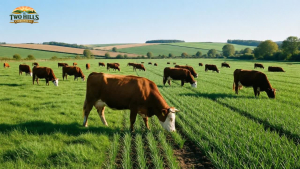
(Image generated using AI)
As grazing season approaches, beef producers are once again faced with a familiar challenge: how to get the most out of their land without compromising its future.
According to the Beef Cattle Research Council (BCRC), effective grazing management remains one of the most powerful tools available to improve cattle performance, boost pasture productivity, and ensure long-term sustainability. Whether producers are fine-tuning an existing system or starting fresh, a few key principles can make all the difference.
One of the most widely recognized guidelines is the “take half, leave half” approach. By ensuring that roughly 50 percent of available forage remains after grazing, producers can protect plant health and promote regrowth. Overgrazing, even in the short term, can weaken pastures and reduce productivity over time.
Equally important is allowing pastures time to recover. Rest periods during the growing season help plants rebuild root systems and maintain their strength. Rotational grazing systems, which move cattle through multiple paddocks, are often used to support this balance between use and recovery.
Timing also plays a critical role. Grazing too early in the spring or during sensitive growth stages can significantly impact plant vigour. Delaying grazing during these periods allows forage to establish properly and improves resilience throughout the season.
Producers are also encouraged to manage how cattle move across the land. Livestock tend to cluster near water or shaded areas, which can lead to uneven grazing. Strategic placement of salt and mineral blocks can help encourage more uniform distribution and prevent overuse of specific areas.
Choosing the right grazing system is another key decision. While continuous grazing requires less management, it often leads to reduced pasture productivity. Rotational systems, though more labour-intensive, can extend the grazing season and improve overall forage use.
Water quality should never be overlooked. Clean, accessible water is essential for herd health and performance. Research shows that calves with access to pumped water can gain significantly more weight over a grazing season compared to those drinking directly from dugouts. Regular testing is recommended, as water quality can change throughout the summer.
Incorporating legumes such as alfalfa and clover can also improve forage quality, though producers must manage the risk of bloat. Newer varieties, including sainfoin, offer a promising balance by reducing this risk while maintaining nutritional benefits.
Finally, regularly evaluating carrying capacity ensures that pasture resources are not overstretched. Matching herd size to available forage is critical for maintaining both productivity and sustainability.
Ultimately, grazing management is both an art and a science. No two operations are exactly alike, and success depends on adapting these principles to local conditions, including climate, soil, and herd needs.
By taking a thoughtful and proactive approach, producers can strengthen their operations today while protecting the health of their land for years to come.
For more detailed information and to access the full grazing management guide, readers are encouraged to visit the Beef Cattle Research Council (BCRC) website at www.beefresearch.ca.
This article is based on material provided by the BCRC, and full credit is given to the organization for its ongoing work in supporting beef producers through research and practical resources.
For the original release visit the following link www.beefresearch.ca/blog/eight-key-grazing-management-facts-for-the-upcoming-grazing-season/.
Mental Health Mondays: You’re Not Lazy — You’re Overwhelmed

(Image generated by AI)
There’s a lie many of us quietly tell ourselves.
“I’m just being lazy.”
It sounds harmless. Almost like an excuse. But for many people, it isn’t the truth at all.
Because the reality is this:
You’re not lazy.
You’re overwhelmed.
In a world that constantly demands more—more productivity, more decisions, more responsibility—it doesn’t take much for the mind to reach its limit. And when it does, it doesn’t always look like stress or panic.
Sometimes, it looks like doing nothing.
That project you’ve been putting off.
That message you haven’t replied to.
That idea you were excited about but haven’t touched.
It’s easy to label all of it as laziness.
But take a step back for a moment.
How many things are you carrying right now?
Not just physically—but mentally.
Unfinished tasks.
Financial pressure.
Expectations from others.
Expectations from yourself.
The constant noise of what you should be doing.
That’s not laziness. That’s overload.
Your brain isn’t refusing to work. It’s protecting itself from burnout.
The problem is, we don’t treat it that way.
Instead of pausing, we pile on guilt.
Instead of simplifying, we add pressure.
Instead of understanding, we judge ourselves.
And that only makes the weight heavier.
The truth is, when everything feels important, nothing gets done.
So where do you start?
Not with a complete life overhaul. Not with a sudden burst of motivation.
You start small.
Write everything down. Get it out of your head and onto paper. What feels overwhelming often loses its power once you can actually see it.
Then choose just one thing.
Not the biggest task. Not the most impressive one. Just one small, manageable step forward.
And give yourself permission to let that be enough for today.
Finally, remove the pressure to be perfect.
You don’t need to solve your entire life in one sitting. You just need to move, even slightly, in the right direction.
Because progress doesn’t come from intensity.
It comes from consistency.
And consistency becomes possible when the weight you’re carrying is manageable.
So the next time you catch yourself saying, “I’m being lazy,” pause for a second.
Ask yourself a better question:
“Am I actually overwhelmed?”
If the answer is yes, then the solution isn’t discipline.
It’s understanding. It’s clarity. It’s giving yourself room to breathe.
And sometimes, that’s the strongest move you can make.
Easter Sunday: A Time for Renewal, Hope, and New Beginnings

(Image generated using AI)
For millions around the world, Easter stands as one of the most significant days on the calendar—a time marked by faith, reflection, and renewal.
Rooted in the Christian tradition, Easter Sunday commemorates the resurrection of Jesus Christ, symbolizing victory over death and the promise of eternal life. It is a message that has endured for centuries, offering hope in times of uncertainty and light in moments of darkness.
Yet beyond its religious origins, Easter has grown to represent something universal: the idea of new beginnings.
Across communities, families gather to share meals, children take part in Easter egg hunts, and people pause from their busy lives to reconnect—with loved ones, with their beliefs, and often with themselves. It is a day that gently reminds us that no matter how difficult the past may have been, there is always the possibility of renewal.
In today’s fast-moving world, that message feels more relevant than ever.
We all face moments where we feel stuck—personally, professionally, or emotionally. Easter encourages us to step back and reflect, to let go of what no longer serves us, and to move forward with renewed purpose. Whether through faith, quiet reflection, or simply spending time with those who matter most, the spirit of Easter offers an opportunity to reset.
For many, it is also a time of gratitude. Gratitude for life, for second chances, and for the small, often overlooked blessings that surround us each day.
As Easter Sunday unfolds, it invites us to carry its message beyond a single day. To approach the weeks ahead with kindness, resilience, and a willingness to begin again.
Because at its heart, Easter is not just about what happened long ago—it is about what is possible today.
Wishing everyone a joyous and Happy Easter!
He is risen!
Canadian Farmland Values Continue Climb in 2025

(Image generated using AI)
The value of Canadian farmland continued its steady rise in 2025, reinforcing the strength of the country’s agricultural sector—even as economic pressures persist.
According to the latest report from Farm Credit Canada (FCC), the average value of farmland increased by 9.3 per cent nationwide over the past year. Much of that growth was driven by the Prairie provinces, with Manitoba leading the way at 12.2 per cent, followed by Alberta at 11.4 per cent and Saskatchewan at 9.4 per cent.
Atlantic Canada also saw notable gains, particularly in New Brunswick and Prince Edward Island, while growth in Ontario and Quebec slowed compared to previous years. British Columbia was the only province to record a decline, dropping 1.7 per cent, though it still maintains the highest average farmland values in the country.
Despite broader economic uncertainty—including trade tensions, high input costs, and fluctuating commodity prices—the farmland market has remained resilient. Demand continues to be supported by strong livestock prices, lower borrowing costs, and a limited supply of land available for sale.
“Demand for farmland remained robust, supported by long-term confidence in Canadian agriculture,” said J.P. Gervais, executive vice-president of ag production at FCC. “The ongoing uncertainties related to trade and tariffs… did not deter buyers’ interest in farmland.”
The steady rise in land values reflects more than just market activity—it underscores continued confidence in agriculture as a long-term investment. Farmers are expanding operations and making strategic land purchases, contributing to sustained price growth across cultivated, irrigated, and pastureland.
However, the upward trend also presents challenges. For new and younger farmers, higher land prices can create significant barriers to entry, making it increasingly difficult to establish a foothold in the industry.
Programs such as FCC’s Transition Loan aim to address this issue by helping new entrants access financing and navigate the costs of getting started in agriculture.As farmland values continue to climb, the outlook for Canadian agriculture remains strong—but the balance between growth and accessibility will be key to the sector’s long-term sustainability.
For more information and insights, visit www.fcc-fac.ca/en/knowledge/economics.
Information for this article was sourced from Farm Credit Canada.
Alberta Introduces Bill 28 to Accelerate Housing and Strengthen Municipal Accountability

(Image generated using AI)
Alberta’s government is moving to fast-track housing development and tighten accountability at the municipal level with the introduction of Bill 28, a sweeping legislative package aimed at modernizing how communities grow and govern themselves.
The proposed Municipal Affairs and Housing Statutes Amendment Act, 2026 is designed to streamline approvals, strengthen essential services and establish clearer standards for local decision-making across the province.
“Municipal governments shape everyday life in Alberta, from the water you drink and the roads you drive to the safe, clean streets where your kids play,” said Minister of Municipal Affairs Dan Williams. “This legislation updates those systems so communities can grow, councils can lead with clarity and Albertans can trust how their local decisions are made.”
Faster housing development
A key focus of Bill 28 is accelerating homebuilding through a series of measures aimed at reducing delays and increasing efficiency.
Proposed changes include streamlined approvals for low-risk projects, the introduction of automated permitting—referred to as “Automatic Yes”—and improved transparency around approval timelines. The legislation would also clarify off-site levy rules and enable the use of community design codes to speed up developments that meet pre-approved local standards.
Industry leaders say these changes could significantly improve housing availability.
“Bill 28 is paving the way for more efficient homebuilding across our province by streamlining approvals, automating permits and improving transparency,” said Scott Fash, CEO of BILD Alberta. “Clear rules help build vibrant communities and a more affordable future for every Albertan.”
The legislation also expands access to municipal reserve lands for charter schools, placing them on equal footing with other publicly funded schools. These schools would also be exempt from off-site levies, supporting greater access to educational choice.
Additional updates aim to support long-term sustainability in seniors’ lodge housing and clarify how provincially approved aggregate developments interact with municipal land-use decisions.
Fairer and more consistent taxation
Bill 28 also proposes reforms to strengthen fairness in property taxation.
Among the changes is a prohibition on vacancy-style taxes, ensuring homeowners are not penalized based on how frequently they use their property. The goal is to ensure similar properties are taxed consistently regardless of occupancy.
The legislation would also modernize assessment rules for industrial properties such as pipelines, wells and railways. By updating how costs are assessed and reported, the province aims to improve consistency and reduce disputes.
Strengthening accountability and governance
To build trust in municipal leadership, the proposed legislation introduces a province-wide councillor accountability framework.
The framework includes enforceable standards of conduct, independent third-party investigations for serious misconduct and a formal appeals process. Matters involving financial conflicts of interest would continue to be handled through the courts.
“The Mid-sized Towns Mayors Caucus welcomes and supports the introduction of independent investigators as part of the proposed code of conduct legislation for municipal leaders,” said Richard Warnock, chair of the caucus.
Bill 28 would also revise the municipal viability review process by making community votes non-binding plebiscites, allowing the province to consider broader regional and long-term sustainability factors.
Improving transparency for residents
The legislation includes several measures aimed at increasing transparency for both councils and residents.
Municipalities would be required to publicly disclose salaries above a specified threshold, while councillors would receive more timely access to information, including reports on administrative decisions made outside existing approvals.
In addition, property tax notices could include a separate line item for federal policing costs, giving residents clearer insight into major expenses, particularly in smaller communities.
Changes are also proposed for Business Improvement Areas, reducing administrative burden while maintaining accountability to local businesses.
Oversight of public institutions
Bill 28 introduces amendments to the Libraries Act that would allow the minister to initiate reviews or respond to complaints related to public libraries, creating a more consistent approach to oversight.
The proposed changes also lay the groundwork for new regulations aimed at restricting access to sexually explicit visual materials in public libraries. Under the framework, individuals aged 16 and older would have access, while those 15 and under would require parental consent.
A broad approach to growth and governance
According to the province, Bill 28 is part of a broader effort to support growth, improve service delivery and ensure municipalities operate with clear, accountable standards.
“Alberta is leading the country on housing, and Bill 28 will help keep us there—cutting red tape, speeding up approvals, and clearing the way to get shovels in the ground and roofs over Albertans’ heads,” said Minister of Assisted Living and Social Services Jason Nixon.
If passed, the legislation is expected to play a significant role in shaping how Alberta communities develop, govern and deliver essential services in the years ahead.
Information for this article was sourced from the Government of Alberta website.
Screen Test Mobile Mammogram Clinic Coming to Two Hills April 24–27

Residents of Two Hills and surrounding communities will soon have convenient access to an important health service, as Primary Care Alberta’s Screen Test mobile mammogram clinic arrives from April 24 to 27, 2026.
Screen Test is a free program that provides screening mammograms to help detect breast cancer early—often before symptoms appear. Early detection significantly improves treatment outcomes, making regular screening a vital part of maintaining long-term health.
The mobile units travel to more than 120 communities across Alberta, bringing essential screening services closer to home and removing barriers to access.
Who should get screened?
Women between the ages of 45 and 74 are encouraged to book a screening mammogram every two years. No referral is required for this age group, making it easy to include screening as part of a regular health routine.
Those aged 40 to 44, as well as individuals over 75, are advised to speak with a healthcare provider about the benefits and risks of screening. A referral is required for first-time screenings in the 40–44 age group and for those over 75.
Appointments can be booked by calling 1-800-667-0604.
Understanding breast density
Screen Test now includes breast density scores in result letters, providing individuals with additional insight into their breast health.
Breast density refers to the amount of dense tissue compared to fatty tissue in the breast. Dense tissue can make it more difficult to detect cancer on a mammogram, as both appear white on the image. It is important to note that dense breast tissue is common and is only one of several risk factors.
Other factors—such as age and genetics—play a more significant role in determining overall risk. Because breast density cannot be determined by appearance or feel, a mammogram is the only way to assess it.
Residents are encouraged to discuss their breast density results and personal risk factors with their healthcare provider.
For more information on Screen Test and breast cancer screening, visit screeningforlife.ca/breast.
Information for this article was provided by Primary Care Alberta.
Virtual Physician Program Strengthens Rural Emergency Care in Alberta

(Image generated using AI)
Rural communities across Alberta are seeing improved access to emergency care thanks to an innovative virtual physician program introduced by Alberta Health Services (AHS).
The Virtual Emergency Physician (VEP) program connects rural emergency departments facing temporary physician shortages with experienced doctors through secure video and phone technology. The initiative focuses on supporting patients with non-life-threatening conditions while ensuring continuity of care when on-site coverage is unavailable.
Initially launched in January 2025 at five locations—Hinton, Edson, Beaverlodge, Lac La Biche and Elk Point—the program has already shown promising results.
According to AHS, in its first six months:
- Virtual physicians covered 229 shifts, totaling nearly 3,000 hours of service
- Approximately 1,150 patients received care through the program
- Emergency department disruptions due to physician shortages were reduced by 98%
- Patient satisfaction remained strong, with many indicating they would recommend the service
The program allows on-site clinical staff to connect with a physician remotely, enabling real-time consultations, diagnoses, and treatment plans. Physicians can order tests, prescribe medications, and determine whether a patient can be discharged or requires transfer to another facility.
Importantly, emergency medical services (EMS) remain available to transport higher-acuity patients to facilities with in-person physician support when needed.
Over the past year, the VEP program has expanded to additional communities, including Barrhead, Coronation, Grimshaw, Redwater, Smoky Lake, St. Paul, Westlock—and notably, Two Hills.
For smaller communities, where recruiting and retaining full-time emergency physicians can be an ongoing challenge, the program offers a practical solution to maintaining consistent care.
AHS officials say the goal remains to ensure in-person physician coverage whenever possible, but virtual support has proven to be an effective backup that helps stabilize services and support frontline healthcare teams.
Patient feedback has also been encouraging, with many reporting that the virtual care experience was comparable to an in-person visit.
As the program continues to expand, Alberta Health Services says it will monitor outcomes closely and consider adding more communities where additional support is needed.
Information for this article was provided by Alberta Health Services.
For more information about Alberta Health Services, visit their website at www.albertahealthservices.ca.
Alberta Moves to Strengthen Animal Protection Laws

(Image generated using AI)
Alberta is taking a significant step toward improving animal welfare with proposed updates to its long-standing Animal Protection Act.
Introduced as Bill 22, the Animal Protection Amendment Act marks the first major overhaul of the legislation in more than 20 years. The proposed changes aim to modernize the law, strengthen enforcement, and better protect animals across the province.
If passed, the amendments would expand the authority of peace officers, giving them improved tools to respond to cases of animal distress and ensure compliance with the law. Notably, inspections would extend beyond traditional settings to include facilities such as boarding and grooming businesses—areas where animals are frequently under the care of others.
Penalties for animal cruelty would also see a significant increase. Maximum fines could rise from $20,000 to $250,000, with serious offences carrying the possibility of jail time of up to 12 months.
The legislation also takes aim at repeat offenders. Proposed changes would enhance how court orders are issued and enforced, while introducing a first-of-its-kind measure allowing Alberta to recognize and enforce animal protection orders from other provinces and territories.
According to Agriculture and Irrigation Minister RJ Sigurdson, the bill reflects Alberta’s commitment to ensuring animals are treated with care and respect.
Stakeholder feedback played a key role in shaping the proposed amendments. Consultations included input from animal welfare organizations, livestock representatives, veterinarians, municipalities, and First Nations.
Animal welfare advocates have welcomed the changes, noting that stronger enforcement tools and clearer legislation will help better protect animals and support those responsible for their care.
If passed, the updated act would position Alberta among the leading provinces in Canada when it comes to animal protection.
Information for this article was sourced from the Government of Alberta website
Mental Health Mondays: Why We Feel Stuck (And How to Break Out of It)

(Image created using AI)
We all have these moments.
Not enough in the tank to follow through. Projects get left unfinished, and brilliant ideas drift into the background as day-to-day responsibilities take over. Maybe it’s a book you’ve been meaning to write, or a course you wanted to take to level up your career. Whatever it is, most of us have something that feels stuck in the mud — no matter how much we spin our wheels, we just can’t seem to gain traction.
But it doesn’t have to stay that way.
Here are a few practical ways to break out of the “stuck” cycle and start making real progress:
- Break big tasks into smaller ones
- Celebrate the small wins
- Stay consistent
- Don’t fear the outcome
Instead of saying, “I want to finish my book,” start with something realistic and achievable — like writing 100 to 200 words a day. Large, vague goals can feel overwhelming. Compare “organize the garage” with “sort the tools into one box.” One feels heavy; the other feels doable. Small, defined steps make progress feel possible.
Give yourself micro-tasks throughout the day. Each time you complete one, your brain gets a small boost — a sense of accomplishment that builds momentum. Like markers in a marathon, these small wins remind you how far you’ve come and encourage you to keep going.
Once you set a standard, stick to it. It doesn’t have to be extreme, but it does need to be steady. In Make Your Bed by William H. McRaven, we’re reminded that small, repeated actions can lead to tremendous results. One focused effort a day, done consistently, can build into something powerful over time.
One of the biggest reasons we get stuck is fear — fear of failure, fear that our efforts won’t matter. But finishing something, regardless of the outcome, proves something important: that you can follow through. And that confidence carries into everything else you do.
If you’re feeling stuck, remember — you’re not alone. Even the most successful people have faced setbacks and self-doubt. The difference is they kept going.
Sometimes, progress isn’t about making a giant leap forward.
Sometimes, it’s just about taking the next step.
What Alberta Ranchers Can Learn from Water Stewardship in B.C.
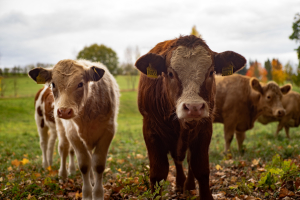
(Image Credit: Rene Schindler/ Pixabay)
Balancing conservation, cattle and growing water pressures
As water challenges continue to grow across Western Canada, a ranching operation in British Columbia is offering lessons that resonate far beyond its borders—including for producers here in Alberta.
Located in the South Okanagan, Thomas Ranches has become a model for how agriculture and conservation can work together. In 2000, the Thomas family partnered with the The Nature Trust of British Columbia to preserve natural habitat while continuing to operate a working cattle ranch.
Today, the operation manages about 200 head of cattle on a portion of the land, with the majority set aside for wildlife habitat—a balance that reflects a growing shift in how ranchers approach land stewardship.
A familiar challenge for Alberta producers
While the South Okanagan is known for its dry climate, the pressures facing Thomas Ranches will sound familiar to many Alberta producers.
Recurring drought conditions, increased demand from growing populations, and competing land-use priorities are all placing strain on limited water supplies across the Prairies. In recent years, many parts of Alberta have faced similar concerns around water availability, particularly during dry seasons.
Wildfire is another shared reality. Like in British Columbia, fires have reshaped landscapes and forced producers to adapt quickly to changing conditions.
At the same time, ranchers are expected to balance livestock production with environmental stewardship—often under increasing public scrutiny.
Smarter water use on the ground
One of the key takeaways from Thomas Ranches is the importance of investing in efficient water systems.
The operation relies on a storage dam to capture water during wetter periods, ensuring supply during dry months—an approach that mirrors water management strategies already used by many Alberta producers.
Upgrades to irrigation infrastructure, including the shift to underground pipelines and pivot systems, have helped reduce water loss and improve efficiency.
These kinds of improvements are becoming increasingly relevant in Alberta, where every drop counts during drought conditions.
Protecting waterways while supporting cattle
Perhaps the most notable change has been the move to off-stream watering systems.
Rather than allowing cattle direct access to creeks, water is delivered to troughs through controlled systems. This protects natural waterways from erosion and contamination while improving water quality for both livestock and wildlife.
Programs in Alberta have also supported similar initiatives, recognizing the long-term benefits for both the environment and agricultural sustainability.
Beyond the practical advantages, these efforts also help strengthen public confidence in the livestock industry—something that continues to grow in importance.
Water access remains a key issue
Reliable access to water remains a critical concern across Western Canada.
In British Columbia, groups like the BC Cattlemen’s Association are advocating for clearer policies around water rights, particularly on Crown land.
In Alberta, similar conversations continue around water management, allocation, and long-term security for agricultural producers.
Ensuring that ranchers have dependable access to water will be essential for maintaining both food production and rural livelihoods.
Looking ahead
As climate variability increases, the experiences of operations like Thomas Ranches highlight the importance of planning, adaptability, and collaboration.
For Alberta ranchers, the message is clear: proactive water management and conservation practices are no longer optional—they are essential.
By combining practical innovation with responsible stewardship, producers across the Prairies are well positioned to meet the challenges ahead while continuing to care for the land that sustains them.
For more information visit the Beef Cattle Research Council website at www.beefresearch.ca/blog/bc-ranch-approach-to-conservation-and-changing-landscapes/.
Information for this article was sourced from the Beef Cattle Research Council. For more information visit their website at www.beefresearch.ca/.

Two Hills Chronicle published its first issue in December 2020. It serves the communities of Two Hills and County and surrounding areas.