
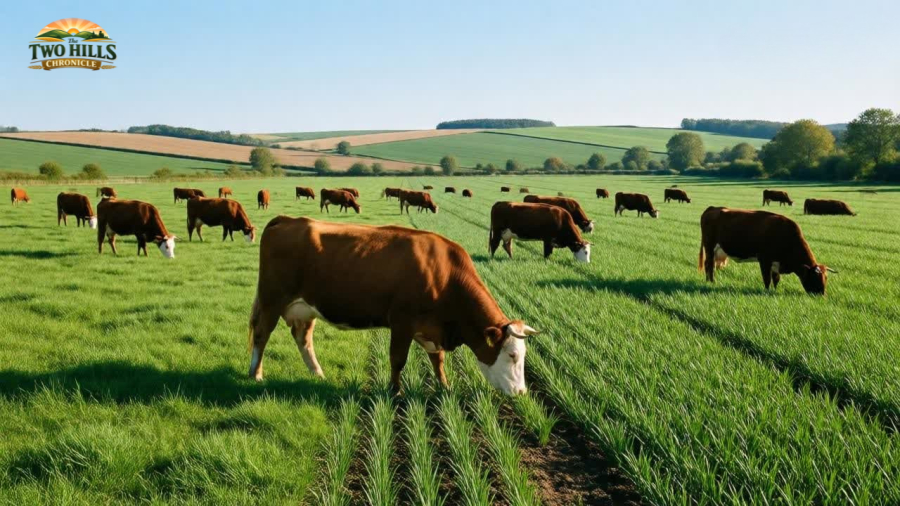
(Image generated using AI)
As grazing season approaches, beef producers are once again faced with a familiar challenge: how to get the most out of their land without compromising its future.
According to the Beef Cattle Research Council (BCRC), effective grazing management remains one of the most powerful tools available to improve cattle performance, boost pasture productivity, and ensure long-term sustainability. Whether producers are fine-tuning an existing system or starting fresh, a few key principles can make all the difference.
One of the most widely recognized guidelines is the “take half, leave half” approach. By ensuring that roughly 50 percent of available forage remains after grazing, producers can protect plant health and promote regrowth. Overgrazing, even in the short term, can weaken pastures and reduce productivity over time.
Equally important is allowing pastures time to recover. Rest periods during the growing season help plants rebuild root systems and maintain their strength. Rotational grazing systems, which move cattle through multiple paddocks, are often used to support this balance between use and recovery.
Timing also plays a critical role. Grazing too early in the spring or during sensitive growth stages can significantly impact plant vigour. Delaying grazing during these periods allows forage to establish properly and improves resilience throughout the season.
Producers are also encouraged to manage how cattle move across the land. Livestock tend to cluster near water or shaded areas, which can lead to uneven grazing. Strategic placement of salt and mineral blocks can help encourage more uniform distribution and prevent overuse of specific areas.
Choosing the right grazing system is another key decision. While continuous grazing requires less management, it often leads to reduced pasture productivity. Rotational systems, though more labour-intensive, can extend the grazing season and improve overall forage use.
Water quality should never be overlooked. Clean, accessible water is essential for herd health and performance. Research shows that calves with access to pumped water can gain significantly more weight over a grazing season compared to those drinking directly from dugouts. Regular testing is recommended, as water quality can change throughout the summer.
Incorporating legumes such as alfalfa and clover can also improve forage quality, though producers must manage the risk of bloat. Newer varieties, including sainfoin, offer a promising balance by reducing this risk while maintaining nutritional benefits.
Finally, regularly evaluating carrying capacity ensures that pasture resources are not overstretched. Matching herd size to available forage is critical for maintaining both productivity and sustainability.
Ultimately, grazing management is both an art and a science. No two operations are exactly alike, and success depends on adapting these principles to local conditions, including climate, soil, and herd needs.
By taking a thoughtful and proactive approach, producers can strengthen their operations today while protecting the health of their land for years to come.
For more detailed information and to access the full grazing management guide, readers are encouraged to visit the Beef Cattle Research Council (BCRC) website at www.beefresearch.ca.
This article is based on material provided by the BCRC, and full credit is given to the organization for its ongoing work in supporting beef producers through research and practical resources.
For the original release visit the following link www.beefresearch.ca/blog/eight-key-grazing-management-facts-for-the-upcoming-grazing-season/.
