

twohillschronicle@26
Mental Health Mondays: Step Outside: How Spring Air Can Reset Your Mind

(Image generated using AI)
As winter loosens its grip and the first signs of spring begin to show across Alberta, something shifts—not just in the landscape, but in how we feel.
Longer days, warmer temperatures, and the return of birdsong offer more than a seasonal change. They offer an opportunity to support our mental well-being in one of the simplest ways possible: by stepping outside.
Research continues to show that spending time in nature can have a measurable impact on mental health. Even short periods outdoors have been linked to reduced stress, improved mood, and increased focus. Exposure to natural light helps regulate our circadian rhythms, improving sleep quality—an essential pillar of mental wellness.
Time outside also influences brain chemistry. Studies suggest that being in green spaces can lower levels of cortisol, the body’s primary stress hormone, while encouraging the release of serotonin, often referred to as the “feel-good” neurotransmitter.
But the benefits aren’t limited to biology.
Nature has a way of gently pulling attention away from the constant noise of daily life. Whether it’s a quiet walk, the sound of wind through trees, or simply sitting in the sun, these moments can create space for reflection and calm. For many, it’s a chance to reset.
Importantly, it doesn’t require a major commitment.
A 10-minute walk, a cup of coffee on the porch, or stepping outside during a lunch break can all make a difference. The goal isn’t perfection—it’s consistency.
As communities across Alberta begin to thaw and reawaken, spring presents a natural invitation: to reconnect with the outdoors and, in doing so, reconnect with ourselves.
Sometimes, the smallest step—out the front door—can be the one that changes everything.
If you or someone you know is struggling, reaching out to a trusted friend, family member, or professional can make a meaningful difference. Support is available.
Is Your Bull Ready? A Year-Round Approach to Bull Management

(Image generated using AI)
Every cow-calf producer has either experienced it firsthand or knows someone who has. Breeding season wraps up with no obvious concerns—only for fall pregnancy checks to reveal open cows, late calving and a breeding window that stretched far wider than planned.
While cow nutrition, body condition and herd management are often closely monitored, one critical factor is frequently underestimated: the bull.
What makes this challenge particularly frustrating is the lack of clear warning signs. A bull may appear active, be seen covering cows and look perfectly capable. On the surface, everything seems normal—until it isn’t.
That’s exactly why a Bull Breeding Soundness Evaluation (BBSE) is more important than many producers realize. It removes much of the guesswork from bull performance and helps ensure breeding success before problems arise.
Thinking Beyond the Season
On many operations, bulls receive significant attention during breeding, but far less once the season ends. In reality, a bull’s value extends year-round. Effective management before, during and after breeding plays a decisive role in herd fertility outcomes.
Rather than treating bull care as seasonal, producers are encouraged to view it as a continuous cycle. Decisions made months ahead of turnout—and long after breeding wraps up—can determine the success of the next calving season.
Pre-Breeding: Setting the Stage for Success
Preparation begins roughly two months before breeding. At this stage, evaluating a bull’s readiness is essential—not optional.
A BBSE, conducted six to eight weeks before turnout, allows time to identify and address potential issues. This timing also helps avoid complications from late-winter conditions that may temporarily affect fertility.
Body condition is equally important. Bulls that are too thin may lack stamina and libido, while over-conditioned animals can face mobility and fertility challenges. The ideal target is a body condition score of 2.5 to 3 on a five-point scale—fit, mobile and ready to perform.
Key pre-breeding considerations include:
- Scheduling and completing a BBSE
- Maintaining optimal body condition
- Updating vaccinations and parasite control
- Checking feet, legs and overall structural soundness
Understanding the BBSE
Turning out a bull that cannot breed is one of the most costly—and often invisible—mistakes in cattle production. A veterinarian-performed BBSE evaluates far more than semen quality; it assesses the bull’s overall ability to successfully breed.
Importantly, fertility is not static. Illness, injury, nutrition, age and environmental stressors can all impact performance. A bull that passed a BBSE last year is not guaranteed to pass again.
A comprehensive BBSE includes:
- History Review
- Physical Examination
- Reproductive Assessment
- Semen Evaluation
Producers and veterinarians assess the bull’s background, including age, breed, past performance, health events, nutrition and management practices.
Structural soundness is critical. Even with good semen quality, a bull with poor mobility or conformation may fail to breed effectively.
This includes both internal and external examination of reproductive organs. Scrotal circumference is a key indicator, with larger measurements linked to improved fertility and earlier puberty in offspring—up to an optimal threshold.
Semen is assessed for motility (movement) and morphology (structure). Bulls are expected to meet minimum standards, with at least 60 per cent motility considered acceptable.
During Breeding: Stay Vigilant
Breeding season typically spans two to three months and places significant physical demands on bulls. It is not uncommon for bulls to lose between 100 and 200 pounds during this period.
Even well-prepared animals can encounter issues. Minor problems—such as lameness or injury—can quickly escalate into major reproductive losses if left unaddressed.
Producers should monitor:
- Bull-to-cow ratios (younger bulls: 1:15–20; mature bulls: 1:25–30)
- Pasture size and terrain to ensure mobility
- Signs of injury, lameness or reduced libido
Post-Breeding: Recovery Matters
Once breeding season ends, the focus shifts to recovery—a phase that is often overlooked but critically important.
Bulls that finish the season in poor condition or with unresolved injuries may struggle to recover in time for the next cycle, affecting long-term herd productivity.
Post-breeding management should include:
- Re-evaluating body condition
- Recording breeding performance and pregnancy rates
- Treating or culling underperforming bulls
A Critical Investment in Herd Success
It only takes one sub-fertile bull to quietly derail an entire breeding season—and the calving season that follows.
At its core, bull management is not just about maintaining another animal on the farm. It is about safeguarding the genetic future of the herd. Treating bulls as a year-round investment, rather than a seasonal necessity, helps ensure consistent reproductive success and long-term productivity.
Information for this article was sourced from the Beef Cattle Research Council. To view the full release, visit the following link www.beefresearch.ca/blog/a-year-round-approach-to-bull-management.
For more information about the Beef Cattle Research Council, visit their website at www.beefresearch.ca.
Rodeo Season Rides Again Across Alberta

(Image generated using AI)
Province invests in agri-tourism as communities gear up for a busy summer
Alberta’s rodeo season is officially underway, bringing with it a wave of excitement, tradition, and economic opportunity for rural communities across the province.
Each year, more than 100 rodeos take place in towns and cities of all sizes, drawing crowds to fairgrounds, arenas, and exhibition sites. From multi-day stampedes and professional competitions to youth showcases and international events, rodeos continue to serve as a vital part of Alberta’s cultural identity—while also delivering a significant boost to local economies.
Through continued investment in agri-tourism, the Government of Alberta is supporting agriculture societies and stampede associations in hosting and growing these events. Between 2023 and 2026, more than $1.3 million has been invested through Travel Alberta to help communities promote rodeos, expand tourism opportunities, and attract visitors to rural regions.
“Rodeos are a great example of authentic experiences that share our western heritage with visitors as they visit and stay in rural communities,” said Tourism and Sport Minister Andrew Boitchenko. “Growing agri-tourism means supporting local businesses and jobs across the province as more people explore rural Alberta.”
Agriculture and Irrigation Minister RJ Sigurdson echoed the sentiment, highlighting the deeper cultural significance of the season.
“The opening of Alberta’s rodeo season marks an exciting time steeped in tradition, celebrating the province’s vibrant heritage and deep-rooted connection to Western culture,” he said. “Rodeos have long been a gathering point for communities across Alberta, honouring the skills, courage and spirit of ranching life.”
The numbers reflect that growing interest. In 2025, 43 rodeos held under the Canadian Professional Rodeo Association banner attracted more than 525,000 fans—an increase of nearly 100,000 attendees compared to the previous year. These events generated hundreds of millions of dollars in economic activity and returned almost $1.7 million directly to community groups and initiatives.
“Rodeo is a signature Alberta experience, rooted in agriculture and powered by the values of hard work, dedication and perseverance,” said Canadian Professional Rodeo Association CEO Denny Phipps. “These events reinvest millions back into their communities annually, delivering lasting benefits far beyond the arena.”
Beyond the spectacle, rodeos play a crucial role in sustaining rural infrastructure and livelihoods. Investments tied to these events help upgrade arenas, maintain fairgrounds, and support year-round employment for livestock breeders, veterinarians, feed suppliers, and trainers.
Local leaders also point to the broader social impact.
“Rodeos strengthen local economies by supporting small businesses, creating jobs and attracting tourists from all across Canada and the United States,” said Erik LeMieux, president of the Cardston Ag Society. “They also create experiences for youth and families, fostering a sense of belonging and community pride while supporting mental health and well-being.”
With a packed calendar of events stretching from early May through the summer, Alberta’s rodeo season is set to once again unite communities, celebrate heritage, and drive economic growth across the province.
Upcoming Rodeo Highlights
- May 1–3: Drayton Valley
- May 2: Brule
- May 9: Cold Lake
- May 9–10: Medicine Lodge Rodeo
- May 16: Thorsby Haymaker Rodeo
- May 21–23: Red Deer
- May 22–24: Mayerthorpe Rodeo
- May 22–24: Rainmaker Rodeo (St. Albert)
- May 22–24: Buffalo Lake Métis Settlement
- May 28–31: Leduc
- May 28–31: Grande Prairie
- May 30–31: Harmon Valley Ag Society
- May 30–31: Hand Hills
- June 4–6: Bonnyville
- June 5–6: Brooks
- June 5–7: Stony Plain Farmer’s Days and Rodeo
- June 5–7: Lea Park
- June 5–7: Rocky Mountain House
- June 11–13: Daines Ranch Pro Rodeo
- June 18–21: Sundre Pro Rodeo
- June 25–July 1: Ponoka
To see the
Information for this article was sourced from the Government of Alberta website.
Volunteers Mark 50 Years of Keeping Alberta’s Highways Clean
(Image generated using AI)
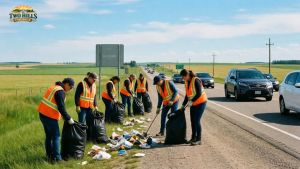
Alberta is celebrating a major milestone this year as communities across the province come together for the 50th annual highway cleanup — a grassroots initiative that has become a cornerstone of environmental stewardship and local fundraising.
On Saturday, May 2, from 7 a.m. to 5 p.m., thousands of volunteers will don bright safety vests and head to Alberta’s highways to collect litter and debris. The effort not only helps preserve the province’s natural beauty, but also raises vital funds for community organizations.
Motorists are being urged to slow down, follow posted signs and exercise caution when passing cleanup crews. Volunteers are likewise reminded to stay alert, remain visible and adhere to all traffic safety guidelines while working along roadways.
Since its launch in 1976, the annual cleanup has grown into one of Alberta’s most enduring community traditions. Over the past five decades, more than 380,000 volunteers have taken part, collecting upwards of 1.1 million bags of trash along nearly 250,000 kilometres of highway.
“Since its inception in 1976, the annual event has seen tens of thousands of Albertans collecting litter and debris from thousands of kilometres of roadside,” said Transportation and Economic Corridors Minister Devin Dreeshen. “This grassroots tradition not only helps preserve the natural beauty of Alberta’s landscapes but also fosters community spirit and environmental stewardship.”
Beyond its environmental impact, the program has also delivered significant financial support to local groups. More than $20 million has been distributed to over 17,000 clubs and organizations, with the province providing $100 for every kilometre of highway cleaned.
For many participants, the cleanup is as much about community as it is about the environment.
“The Alberta highway cleanup is one of the most important events for our scouting group,” said Maurice Shevalier, group commissioner for the 169 Bowmont Scouting Group. “This event is a vital fundraiser that provides essential support for group activities. In every sense — fundraising, community service and environmental impact — the highway cleanup is a cornerstone event for our group.”
Volunteers must be at least nine years old, complete safety training and be supervised by an adult. In the event of poor weather, the cleanup will be postponed to Saturday, May 9.
Residents can check current road conditions and potential delays by dialing 511 within Alberta, visiting the provincial 511 website at 511.alberta.ca, downloading the 511 mobile app or following @511Alberta on social media.
As Alberta marks 50 years of this province-wide effort, the message remains clear: small acts, multiplied across communities, can have a lasting impact.
Information for this article was sourced from the Government of Alberta website.
Alberta Expands Support to Grow Northern Workforce
(Image generated using AI)
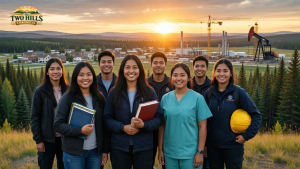
Alberta’s government is ramping up efforts to strengthen its northern workforce, announcing increased funding for the Northern Alberta Development Bursary (NADB) program to support post-secondary students and meet growing labour demands across the region.
With applications to the bursary nearly doubling over the past year, the province is boosting its investment for the third consecutive year. Nearly $2.5 million in total funding has been committed for 2025–26, including close to $1 million in new funding, to assist more than 350 students with education and living expenses.
The NADB program supports students pursuing certificates, diplomas, and university degrees—particularly in high-demand fields such as health care and education. By helping students study, live, and work in northern Alberta, the initiative aims to build a stronger, more resilient regional workforce while encouraging long-term economic growth.
Officials say the program plays a vital role in reducing financial barriers and creating pathways for students to establish careers in northern communities. Since its inception, the bursary has supported more than 7,100 students across the province, helping cover costs such as tuition, books, travel, and housing.
In addition to general funding, the program includes specialized bursary streams for students entering medical and veterinary fields, as well as targeted support for First Nations, Métis, and Inuit learners. These streams are delivered in partnership with Alberta’s Ministry of Advanced Education, with additional one-time funding support from Indigenous Relations.
For many recipients, the financial assistance is transformative. Students in programs such as the Indigenous Bachelor of Social Work have highlighted the bursary’s role in easing travel and accommodation costs, allowing them to focus more fully on their academic goals.
Looking ahead, applications for the 2026–27 bursary cycle open May 1 and will run through Nov. 30. The province has allocated $1.5 million annually over the next three years through Budget 2026 to support the program, while maintaining its core funding levels.
Businesses will also have an opportunity to participate through the Bursary Partnership Program, which provides matching funds to support students in fields aligned with local labour market needs—further strengthening the connection between education and employment in northern Alberta.
As Alberta’s population and economy continue to expand, the government says it remains focused on creating opportunities for people of all backgrounds to train, build careers, and contribute to the long-term success of northern communities.
Information for this article was sourced from the Government of Alberta website.
Spring Land Application: Getting the Most Value from Every Nutrient
(Image generated using AI)
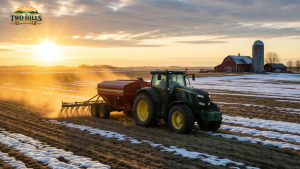
As spring arrives across Alberta’s agricultural landscape, producers are once again faced with a familiar challenge: how to make the most of nutrient application during one of the busiest—and most unpredictable—times of the year.
Applying manure, compost, digestate, and other organic nutrient sources in early spring can be complex. But when done right, it offers a powerful opportunity to maximize nutrient use efficiency, reduce input costs, and support strong crop growth throughout the season.
“Applying manure and other nutrient sources in early spring can be challenging, but when planned right, it helps keep nutrients in the field and makes every dollar work harder,” says Deanne Madsen, nutrient management specialist with the Alberta government.
Balancing Opportunity and Risk
Spring application aligns well with crop nutrient demands, but it also carries inherent risks. Snowmelt and early-season rainfall can move valuable nutrients off fields before crops have a chance to absorb them. This not only reduces their agronomic value but can also contribute to water quality concerns and downstream impacts.
For many livestock producers, timing is often dictated by operational realities—emptying storage facilities, cleaning pens, and managing labour availability. Combined with variable field conditions, these pressures can make timing decisions difficult.
Planning Makes the Difference
Careful planning and smart field selection are critical to minimizing nutrient loss and maximizing returns. When paired with beneficial management practices, spring land application can significantly reduce environmental risk while improving efficiency.
Producers are encouraged to consider the following best practices:
- Ensure adequate land availability or develop a nutrient management plan
- Avoid fields that are poorly drained or already high in salinity or soil nitrate levels
- Maintain a minimum distance of 150 metres from nearby residences or occupied buildings
- Monitor weather forecasts closely and avoid applying on frozen or snow-covered ground
- Protect water sources by maintaining setbacks of at least 30 metres from wells and surface water
- Prioritize lower-risk fields, such as those with perennial forage, cover crops, or strong crop residue
Understanding Regulatory Requirements
In Alberta, land application of manure and other nutrient sources is governed by the Agricultural Operation Practices Act (AOPA) and its associated regulations. These rules are designed to ensure nutrients remain on the land and do not pose environmental risks.
Producers handling larger volumes—500 tonnes or more annually—must meet additional requirements, including soil testing and detailed record keeping for at least five years. Required records include:
- Recent soil test results (within three years)
- Soil texture analysis (one-time requirement)
- Volume or weight of nutrient materials applied
- Names and addresses of individuals applying or receiving nutrients, along with dates
- Locations of all land where nutrients are applied
“Keeping good records can help you track nutrients and make better management decisions over time,” Madsen notes.
Support and Resources Available
Producers are encouraged to engage early with the Natural Resources Conservation Board (NRCB) to explore options and ensure compliance with regulations. These conversations can help align operational needs with environmental and legal expectations.
For further guidance on setbacks, soil testing, and nutrient management planning, producers can contact 310-FARM or reach out to their nearest NRCB field office.
Information for this article was sourced from the Government of Alberta website.
Opinion: Net Zero Is Collapsing – Why Is Canada Still Clinging to It?

(Image generated using AI)
As global conversations around energy policy and climate strategy continue to evolve, perspectives on the path forward are increasingly diverse—and often sharply divided.
The following commentary from C2C Journal contributor Gwyn Morgan offers one viewpoint on the future of net-zero policy, energy security and Canada’s economic direction.
This article is published as received and reflects the views of the author.
After decades spent pursuing net-zero dreams at great cost to their economies, many of the world's industrialized nations are waking up. War, geopolitical instability and the threat of disrupted oil and natural gas supplies have refocused attention on energy security. More and more governments are adjusting accordingly.
Canada's Liberal government, however, is among those that is not. As the climate change policy responses of countries increasingly diverge, it is worth reviewing how we even got here.
What began nearly half a century ago as a primarily scientific concern soon evolved into a sweeping political project. At the 1979 World Climate Conference, delegates called on governments to "foresee and prevent man-made changes to the climate that might be adverse to the well-being of humanity." By the 1992 Earth Summit in Rio, that caution had hardened into a global mandate to combat "dangerous human interference with the climate system." The chief villain behind this alleged interference? The oil and natural gas industry.
From Rio, the movement accelerated. The 1997 Kyoto Protocol and subsequent agreements imposed emissions targets primarily on Western economies. Meanwhile, many of the world's largest emitters — including China and India – continued expanding their energy use, and the associated greenhouse gas emissions, without comparable constraints. The result was a fundamental imbalance: countries like Canada accepted economic sacrifice for negligible global effect.
For years, governments could sustain this contradiction. They imposed carbon taxes, subsidized wind and solar energy, and promised that technological innovation would reconcile environmental ambition with economic growth. That illusion is now breaking down.
Recent events have exposed the fragility of the global energy system. Conflict in the Middle East and threats to critical shipping routes have sent oil prices soaring above US$100 per barrel. Countries that once championed rapid decarbonization are now demanding that supply lines be restored and fossil fuel flows maintained. The same governments that pledged to eliminate crude oil and natural gas (along with dirty coal) are now scrambling to secure more of it.
Even some of the climate change movement's most committed voices are retreating. As prominent climate journalist Lucy Biggers was forced to admit: "Solar and wind production just aren't as energy-dense or reliable as oil and gas." Despite trillions of dollars spent on renewables, Biggars noted, fossil fuels still furnish 86 percent of the world's primary energy.
That is the reality policymakers in net-zero-obsessed countries like Canada have tried to ignore.
Energy forms are not readily interchangeable. Modern economies depend on sources that are reliable, scalable and energy-dense. Wind and solar, while useful supplements, cannot yet replace oil and natural gas at the scale required. Attempts to force that transition prematurely have led to rising costs, supply instability and, increasingly, public backlash.
The consequences are visible everywhere. Even in places once held up as models of green transition, governments are quietly reversing course. The recent collapse of energy supply in Cuba – where electricity shortages have become widespread – offers a stark illustration of what happens when energy systems fail to meet basic demand. Net zero, when it actually arrives, is a lot less pleasant than promised.
Yet Canada continues to pursue policies that ignore these realities.
The federal government may have removed the consumer carbon tax, but this was largely cosmetic. The industrial carbon tax remains, hidden from public view — and is scheduled to rise to $170 per tonne of CO2-equivalent emissions within a few years. These costs do not disappear; they are passed through the economy in the form of higher prices for goods, services and energy.
At the same time, Canada's share of global emissions remains small at a mere 1.6 percent. Even drastic domestic reductions will have no measurable impact on global climate outcomes. What they will do is weaken Canada's economy.
This is not theoretical. Years of restrictive policy have already contributed to declining capital investment in all critical sectors of the economy, with mounting pressures on productivity, unemployment and affordability. For an energy-producing and -exporting nation, the consequences are particularly severe.
Meanwhile, the rest of the world is moving on. The shift is practical. Governments are recognizing that energy security, economic growth and human welfare cannot be subordinated indefinitely to emissions targets that are neither globally coordinated nor technologically feasible.
Canada under Prime Minister Mark Carney has yet to make that adjustment.
Instead, his Liberal Cabinet remains committed to a net-zero framework that is increasingly detached from global conditions. Industrial carbon taxes continue to rise. Public funds are directed toward energy sources that cannot deliver consistent reliability. And the assumption persists that domestic sacrifice will meaningfully influence global emissions. It will not.
Canada's energy policy must begin with a basic fact: the world still runs on crude oil and natural gas. Until alternatives can match their scale and reliability, attempts to force a rapid transition will impose ruinous costs without delivering real results.
The global retreat from net zero is already underway. The only question is how long Canada will wait before acknowledging it.
This commentary was originally published by C2C Journal and is reprinted here with permission.
Read the full original version here.
Gwyn Morgan is a retired business leader who was a director of five global corporations.
Helping Students Harness the Power of AI

(Image generated using AI)
Alberta is taking a forward-looking step to prepare students for a rapidly evolving world, launching a new partnership with the Alberta Machine Intelligence Institute (Amii) to bring artificial intelligence learning into K-12 classrooms across the province.
With technology reshaping nearly every aspect of modern life, the initiative aims to ensure Alberta students are not just familiar with AI, but confident in using it. Through a three-year collaboration, the province will support the development of AI learning kits alongside new resources designed to help teachers build their understanding of the technology.
The kits will complement Alberta’s existing digital literacy curriculum, strengthening AI instruction already underway in classrooms while introducing structured, age-appropriate learning tools. The program also emphasizes responsible AI use, with clear guidelines around privacy, security and academic integrity.
“Artificial intelligence is already reshaping how we work, learn and live – and Alberta students need to be ready for that reality,” said Demetrios Nicolaides. “That’s why we’re strengthening AI education in a way that is safe, responsible and age-appropriate.”
As part of the initiative, Alberta’s government will provide more than $2.7 million in funding to Amii over the next three years. The investment reflects the province’s broader ambition to position itself as a global leader in artificial intelligence and innovation.
“Alberta is building one of the most exciting AI ecosystems in the world,” said Nate Glubish. “This partnership will help ensure the next generation of Albertans is ready to lead, not just participate, in the AI economy.”
Based in Edmonton, Amii is one of Canada’s three national AI institutes and plays a key role in advancing the country’s leadership in artificial intelligence through the Pan-Canadian AI Strategy. The institute already supports educators with free, expert-developed resources and hands-on learning opportunities designed to bring AI concepts into the classroom.
“AI is the defining literacy of the coming decades,” said Cam Linke. “By supporting our educators today, we ensure Alberta students are AI-confident and ready to lead as they enter the workforce.”
Education leaders have also welcomed the move, noting its importance in preparing students for a future shaped by rapid technological change.
“It is encouraging to see this partnership provide schools with agile and responsive resources to prepare students for a rapidly changing world,” said Jason Rogers.
Consultations with businesses and education partners are set to begin this fall, helping shape the development of the AI learning kits. The resources are expected to be available to all school systems—including public, separate, francophone, charter, First Nations and independent schools—by spring 2028.
For more information about Amii (Alberta Machine Intelligence Institute), visit their website at www.amii.ca.
Information for this article was sourced from the Government of Alberta website.
Mental Health Monday: When Spring Feels Like Winter: The Hidden Toll of Unseasonal Weather on Mental Health
(Image generated using AI)
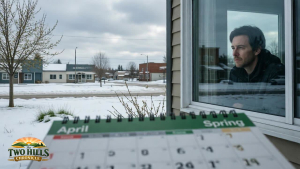
As the calendar turns to spring across Alberta, many residents are finding themselves looking out the window at a landscape that feels anything but seasonal. Snowfall, lingering cold fronts, and grey skies have overstayed their welcome, creating a sense of disconnect between expectation and reality.
While unpredictable weather is nothing new in this part of the world, this year’s extended cold has been particularly noticeable—and for many, it’s taking more than just a physical toll.
On Mental Health Monday, it’s worth acknowledging something that often goes unspoken: the weather doesn’t just shape our environment—it shapes our mood, our energy, and our overall sense of well-being.
Spring traditionally brings with it a psychological lift. Longer days, warmer temperatures, and the return of green spaces tend to encourage outdoor activity, social connection, and a renewed sense of momentum after the long winter months. When that transition is delayed, it can leave people feeling stuck, fatigued, and even discouraged.
For some, this may manifest as a lingering “winter slump”—low motivation, disrupted sleep patterns, or a general sense of heaviness that’s hard to shake. Others may find themselves more irritable or withdrawn, especially as plans for outdoor activities continue to be postponed.
Mental health professionals have long noted the connection between seasonal changes and emotional well-being. Conditions such as Seasonal Affective Disorder (SAD) are often associated with the darker winter months, but when winter-like conditions persist into spring, similar symptoms can linger longer than expected.
In communities like Two Hills and across the province, where daily life is closely tied to the rhythms of the seasons, that delay can feel especially pronounced.
However, there are ways to counteract the effects of an extended winter.
Maintaining routine is one of the most effective strategies. Even when the weather discourages outdoor activity, sticking to regular sleep schedules, meal times, and physical movement can help stabilize mood. Light exposure—whether through windows or indoor lighting—can also play a key role in regulating energy levels.
Equally important is staying connected. Reaching out to friends, family, or community groups can help offset the isolation that colder weather sometimes brings. Even small interactions can have a meaningful impact.
Above all, it’s important to recognize that feeling “off” during this time is not unusual. The mismatch between what we expect—spring sunshine—and what we’re experiencing can create a subtle but real strain.
As Alberta waits for the season to fully turn, Mental Health Monday serves as a reminder to check in—not just on others, but on ourselves. Acknowledging the impact of these lingering winter conditions is the first step toward managing them.
Spring will arrive. Until it does, taking care of mental well-being remains as important as ever.
Shoulders of Giants: Val

This one has been on my heart and mind for a while. I am sure I am not alone when reminiscing about the mouth-watering meals served at the much beloved Val’s Place. Located on Main Street, it was known for its homestyle cooking and daily specials. No matter what time of day, there was always fresh coffee and pie. The sandwiches and soups were legendary.
I recall one morning, like many people do, I was waiting for payday and was a little light on funds. I managed to scrape together enough for a coffee and hoped that would keep me going until lunch, and that I would figure something out from there.
As I walked in, I was greeted with the usual cheerful, “Good morning,” followed by, “What can I get for you?”
“Just a coffee, thank you,” I said, trying to ignore my stomach as I caught the smell of a delicious breakfast already cooking.
Almost like motherly intuition, Val said, “You know, Jared, sometimes people find it more convenient to make a note of what they order and pay on payday. It makes it easier, because who carries cash all the time?”
It felt as if God Himself had arranged for this moment.
So I replied, “Okay, that would be great. I would love a breakfast if that’s okay, please and thank you.”
“Coming right up. Help yourself, the coffee is right there.”
I was almost in tears. My heart was overwhelmed with gratitude. I poured a coffee and grabbed a paper while I waited, and within a few short minutes I was served a sumptuous breakfast worthy of a king.
I can still picture the steam rising off the fresh scrambled eggs, the thick-cut slices of bacon still glistening with the heat of the pan, and the homemade hash browns were tantalising to say the least.
After dining, I thanked her profusely. I left feeling truly blessed. To experience something so selfless from a stranger showed me that the presence of God permeates all beings, and that He can work through anyone or anything in creation.
To this day, I remember that small gesture that left a lasting impact. Every time I see someone in need, I think back to that moment and try my best to be a “Val.”

Two Hills Chronicle published its first issue in December 2020. It serves the communities of Two Hills and County and surrounding areas.