
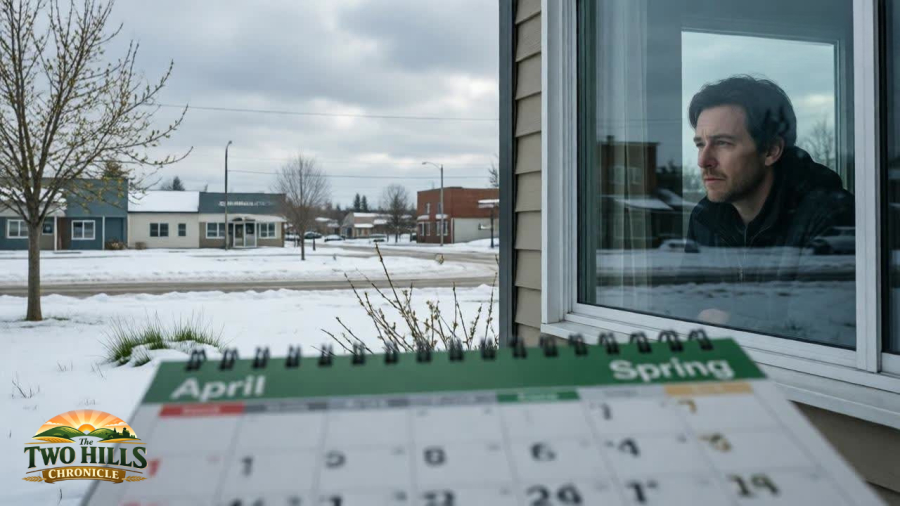
(Image generated using AI)
As the calendar turns to spring across Alberta, many residents are finding themselves looking out the window at a landscape that feels anything but seasonal. Snowfall, lingering cold fronts, and grey skies have overstayed their welcome, creating a sense of disconnect between expectation and reality.
While unpredictable weather is nothing new in this part of the world, this year’s extended cold has been particularly noticeable—and for many, it’s taking more than just a physical toll.
On Mental Health Monday, it’s worth acknowledging something that often goes unspoken: the weather doesn’t just shape our environment—it shapes our mood, our energy, and our overall sense of well-being.
Spring traditionally brings with it a psychological lift. Longer days, warmer temperatures, and the return of green spaces tend to encourage outdoor activity, social connection, and a renewed sense of momentum after the long winter months. When that transition is delayed, it can leave people feeling stuck, fatigued, and even discouraged.
For some, this may manifest as a lingering “winter slump”—low motivation, disrupted sleep patterns, or a general sense of heaviness that’s hard to shake. Others may find themselves more irritable or withdrawn, especially as plans for outdoor activities continue to be postponed.
Mental health professionals have long noted the connection between seasonal changes and emotional well-being. Conditions such as Seasonal Affective Disorder (SAD) are often associated with the darker winter months, but when winter-like conditions persist into spring, similar symptoms can linger longer than expected.
In communities like Two Hills and across the province, where daily life is closely tied to the rhythms of the seasons, that delay can feel especially pronounced.
However, there are ways to counteract the effects of an extended winter.
Maintaining routine is one of the most effective strategies. Even when the weather discourages outdoor activity, sticking to regular sleep schedules, meal times, and physical movement can help stabilize mood. Light exposure—whether through windows or indoor lighting—can also play a key role in regulating energy levels.
Equally important is staying connected. Reaching out to friends, family, or community groups can help offset the isolation that colder weather sometimes brings. Even small interactions can have a meaningful impact.
Above all, it’s important to recognize that feeling “off” during this time is not unusual. The mismatch between what we expect—spring sunshine—and what we’re experiencing can create a subtle but real strain.
As Alberta waits for the season to fully turn, Mental Health Monday serves as a reminder to check in—not just on others, but on ourselves. Acknowledging the impact of these lingering winter conditions is the first step toward managing them.
Spring will arrive. Until it does, taking care of mental well-being remains as important as ever.
