

twohillschronicle@26
Brosseau Cash Raffle Winners – March 2026

The Brosseau Cash Raffle continues to bring excitement to the community, offering participants a chance to win while supporting local initiatives. The March 2026 draw saw several lucky winners take home cash prizes, adding another successful chapter to this ongoing fundraiser.
Below is the list of this month’s winners:
| Date | $ | Ticket | Name | Address |
|---|---|---|---|---|
| 2 | 20 | 979 | Jesse Brosseau | Brosseau |
| 3 | 20 | 875 | Darwin Cassie Alex Bateyko | Two Hills |
| 4 | 20 | 119 | Bob Ross Danielle Williams | Two Hills |
| 5 | 20 | 256 | Wendy Wilhelm | Olds |
| 6 | 20 | 785 | Carey MacNeil | Fort MacMurray |
| 7 | 100 | 229 | Mary Taschuk | Two Hills |
| 9 | 20 | 828 | Kenda Wasylciw | Two Hills |
| 10 | 20 | 90 | Kingston Steinhauer | Saddle Lake |
| 11 | 20 | 531 | Sheridan Kolenosky | Viking |
| 12 | 20 | 479 | Stephen Lawrence | Vermilion |
| 13 | 20 | 506 | Amy Weir | Edmonton |
| 14 | 100 | 65 | Cindy S. Dunbar (Sophie) | Vegreville |
| 16 | 20 | 113 | Huey Frankiw | Two Hills |
| 17 | 20 | 378 | Lorraine Van Brabant | St. Paul |
| 18 | 20 | 906 | Linda Hogstead | Edmonton |
| 19 | 20 | 960 | Jeff Dehid | Two Hills |
| 20 | 20 | 314 | Jason Homeniuk | Hairy Hill |
| 21 | 100 | 691 | Ethan Fritzler (Beckett) | Vilna |
| 23 | 20 | 33 | Elroy Yakemchuk | Hairy Hill |
| 24 | 20 | 30 | Ernest Boulianne | St. Paul |
| 25 | 20 | 504 | Logan Weir | Strathmore |
| 26 | 20 | 758 | Helen Elkow Rose Plaska | Two Hills |
| 27 | 20 | 57 | Teddy Pascal | Edmonton |
| 28 | 100 | 343 | Luke Rehman | |
| 30 | 20 | 441 | Terry Brosseau | Edmonton |
| 31 | 20 | 370 | Kim Conlon | Lloydminster |
Congratulations to all the winners, and thank you to everyone who continues to support the Brosseau Cash Raffle. Your participation plays an important role in strengthening and sustaining community efforts.
Stay tuned for upcoming draws, and best of luck to all participants in the next round!
Government Invests Millions to Support Youth Jobs in Agriculture
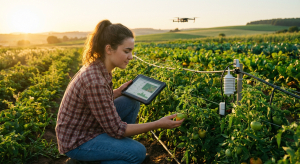
The Government of Canada is investing up to $27 million over the next two years to support youth employment in the agriculture sector, creating new opportunities for both young people and agri-businesses across the country.
The funding, announced by Minister of Agriculture and Agri-Food Heath MacDonald, will be delivered through the Youth Employment and Skills Program (YESP), with nearly $13.5 million allocated for the 2026–27 program year alone.
The program helps employers hire youth aged 15 to 30 by covering a portion of wages and benefits. Businesses can receive up to 50% of employment costs, with support rising to 80% for those hiring youth facing barriers to employment, including Indigenous youth, individuals with disabilities, and those living in rural or remote communities.
Applications for the upcoming program year are open from March 5 to May 4, 2026.
Since its launch in 2019, the program has supported more than 6,200 youth jobs across Canada’s agriculture sector, including nearly 2,000 positions for young people facing employment barriers.
The federal government says the investment is aimed at strengthening the future of Canadian agriculture by helping young people gain hands-on experience while supporting employers facing labour challenges.
New administrative changes have also been introduced this year to streamline the application process and improve access for both employers and applicants.
Local producers and agri-businesses are encouraged to explore the program as seasonal hiring ramps up.
For more information visit the Government of Canada website at agriculture.canada.ca/en/programs/youth-employment-and-skills.
Siwin Secures Major Agri-Processing Tax Credit, Expands Edmonton Operations

Alberta continues to strengthen its position as a leading destination for agri-business investment, with Siwin Foods Ltd. securing a significant boost through the province’s Agri-Processing Investment Tax Credit (APITC).
The company has received just over $1.8 million in tax credits following the completion of a major expansion project at its Edmonton facility. The expansion represents an investment of more than $46 million into Alberta’s economy and has resulted in the creation of over 100 new jobs.
The project included both the enlargement of Siwin’s existing processing plant—where products such as dumplings, potstickers, and sausages are produced—and the construction of a new facility dedicated to items like mini wontons and ginger beef.
Since beginning Canadian operations in 2005, Siwin has seen remarkable growth. The company has increased its production capacity from 20,000 dumplings per hour to an impressive 150,000 per hour. Today, its products are distributed across North America and exported as far as Japan.
Alberta’s Minister of Agriculture and Irrigation, RJ Sigurdson, emphasized the importance of the program in attracting investment and supporting business expansion.
“This investment by Siwin Foods is exactly what the Agri-Processing Investment Tax Credit is designed to support — companies choosing Alberta to grow, create jobs, and expand their reach into new markets.”
Gord DeJong, vice-president of Siwin Foods Ltd., noted that the tax credit played a key role in the company’s decision to expand in Edmonton.
“The Alberta Agri-Processing Tax Credit provided Siwin Foods with the confidence to expand here in Edmonton, increasing our processing capacity by 100 per cent and adding more than 100 new positions.”
The APITC offers a 12 per cent non-refundable tax credit to companies investing at least $10 million into value-added agri-processing facilities. The initiative is open to food manufacturers and bio-processors that enhance raw agricultural products or transform byproducts into consumer and industrial goods.
With up to $175 million in tax credits available per project, the program continues to attract large-scale investments, reinforcing Alberta’s reputation as a business-friendly hub for agri-processing innovation.
Siwin Foods produces a wide range of ready-to-eat and easy-to-prepare products, including dumplings, sausages, Filipino-style meats, and stir-fry items, and supplies major retailers across Canada.
Alberta Moves to Address Unpaid Oil and Gas Taxes

Alberta’s government is taking new steps to tackle the ongoing issue of unpaid oil and gas property taxes, a challenge that continues to impact rural municipalities across the province.
A newly released report from the Property Tax Accountability Strategy (PTAS) working group outlines 17 recommendations aimed at recovering unpaid taxes and preventing future shortfalls. The group includes representatives from the province, the Rural Municipalities of Alberta, rural municipal administrators, and support from the Alberta Energy Regulator, with industry observers also involved.
Unpaid property taxes from oil and gas companies have long placed pressure on municipalities, often forcing local governments to either reduce services or shift the burden onto taxpayers.
Among the key recommendations is expanding the authority of the Alberta Energy Regulator to include property tax oversight, allowing it to act more quickly and effectively when companies fail to meet their obligations. The report also calls for improved data sharing and stronger monitoring systems to help municipalities track and address unpaid taxes.
Provincial officials say changes are already underway. Starting this year, assets belonging to insolvent companies will be removed from municipal assessment rolls more quickly, helping to prevent the buildup of uncollectible taxes. The province will also extend the Provincial Education Requisition Credit for an additional three years, providing continued relief to municipalities affected by unpaid taxes.
Government leaders emphasized that the goal is to create a fairer system that supports both municipalities and responsible industry operators.
While the majority of oil and gas companies continue to meet their tax obligations, unpaid taxes remain a persistent issue. The province says it will review the report’s recommendations in the coming months and determine next steps.
For rural communities, the outcome of these efforts could play a key role in ensuring stable funding for essential services and long-term economic sustainability.
Mental Health Mondays: It's Okay to not be Okay

Many of us grow up believing we must always appear strong. We smile when we feel like crying, say we are “fine” when we are anything but, and carry burdens in silence because we worry that admitting we are struggling will make us seem weak.
But the truth is this: it’s okay to not be okay.
Life can be difficult. Challenges arise, expectations weigh heavily, and sometimes the pressures of daily life become overwhelming. In those moments, pretending everything is fine does not make the pain disappear. It simply hides it.
Acknowledging that you are struggling is not weakness—it is honesty. And honesty is often the first step toward healing.
There are people who care. Friends, family members, community members, and professionals who want to help, but they cannot do so if they do not know what you are facing. Reaching out may feel uncomfortable at first, but it can open the door to understanding, support, and perspective.
Just as importantly, give yourself permission to feel what you feel. Emotions are part of being human. Difficult days do not define who you are, nor do they determine what tomorrow may bring.
If today is one of those days when things feel heavy, take it one step at a time. Speak to someone you trust. Step outside for fresh air. Allow yourself a moment of quiet reflection.
Healing and strength rarely come from pretending everything is perfect. They come from facing our struggles, seeking support, and remembering that even the darkest nights eventually give way to morning.
And if today you are not okay, that’s alright. What matters most is taking the first step toward becoming okay again.
CCGA Opens 2026 Cash Advance Applications for Farmers

The Canadian Canola Growers Association (CCGA) has opened its early application window for the 2026 Advance Payments Program, continuing its support for the operating capital needs of Western Canadian crop and livestock producers.
Farmers can now submit their applications for a 2026 cash advance through CCGA, with the organization set to begin issuing funds for the new program on April 1.
“With seeding around the corner, now is a good time for farmers to submit their spring cash advance applications,” said Dave Gallant, Vice-President of Finance and APP Operations at CCGA.
“Applying early means farmers get their paperwork done before field work begins, and it gives CCGA time to process their applications and provide the spring operating funds they need as quickly as possible.”
For 2026, farmers can access up to $1 million in total financing, including:
- Up to $100,000 interest-free on more than 50 eligible commodities
- Up to an additional $400,000 interest-free on canola
- An interest-bearing advance rate of prime minus 0.25 per cent
Each year, more than 10,000 farmers across Western Canada use a CCGA cash advance to help manage cash flow and reduce borrowing costs. The combination of interest-free and below-prime financing can provide substantial savings compared to other forms of short-term lending.
First-time applicants are encouraged to contact CCGA at 1-866-745-2256 for assistance with their application, while returning applicants can access self-serve options through their online accounts at www.ccga.ca.
Farm Operators Across Canada Preparing for 2026 Census of Agriculture

Farm operators across Canada will soon be asked to take part in an important national survey aimed at strengthening the country’s agricultural sector.
In May 2026, producers will receive a letter inviting them to complete the 2026 Census of Agriculture, conducted by Statistics Canada. The invitation will include a Secure Access Code allowing respondents to complete the questionnaire online.
Participation in the census is required under the Statistics Act, and all information provided is kept strictly confidential and used only for statistical purposes.
Supporting Canada’s agricultural future
The Census of Agriculture has been conducted since 1921 and provides a detailed snapshot of farming across the country. The information collected helps guide policies, programs and research that support farmers and rural communities.
Data gathered through the census helps decision-makers:
- Develop farm support programs and policies
- Strengthen economic growth and international competitiveness
- Respond quickly to natural disasters such as floods, droughts, storms and wildfires
- Support research, planning and advocacy within the agriculture sector
Farm organizations also rely heavily on census data when developing policy recommendations, conducting market research and communicating with their members.
What’s new for 2026
For the upcoming census, improvements have been made to make the questionnaire shorter, faster and easier to complete. In many cases, questions have been reduced by using high-quality alternative data sources, helping lower the response burden for producers.
Farm operators will only be asked questions that are relevant to their specific farming activities.
The questionnaire will still collect important information on topics such as:
- Land use
- Crops and livestock
- Agricultural labour
- Machinery and equipment
- Land management practices
- Farm finances
Input from the agricultural community
In 2022, Statistics Canada conducted a national consultation to ensure the census meets the needs of the agricultural sector. The agency received 847 comments and suggestions from farming organizations, businesses, government departments and academics.
The feedback helped shape the improvements being introduced for the 2026 census.
How to complete the census
Beginning in early May, farm operators will receive a letter with instructions on how to access the questionnaire online.
Producers will be able to:
- Visit the census website
- Enter the Secure Access Code included in their letter
- Complete the questionnaire online
Anyone responsible for or knowledgeable about the day-to-day management of a farm can complete the questionnaire.
By participating, farmers help provide vital information that supports agricultural communities and ensures the continued growth and sustainability of the sector.
More information about the Census of Agriculture is available at the census website at www.census.ca.
Alberta Commits More Than $200 Million to Seniors Housing

Alberta’s government is committing more than $200 million to build and upgrade seniors housing across the province as the number of seniors continues to grow rapidly.
The funding would support the Seniors Lodge Modernization Program (SLMP), which focuses on building new lodges and upgrading existing facilities to ensure seniors can remain in their communities with access to supportive housing.
If passed, Budget 2026 would allocate $150 million over the next three years for the program. This is in addition to almost $54 million already committed to six lodge projects in smaller communities across Alberta. Together, the funding is expected to support more than 1,000 housing units for seniors.
“Seniors have made enormous contributions to the communities we live in today, and they deserve housing that reflects that,” said Jason Nixon, Minister of Assisted Living and Social Services. “By investing more than $200 million to modernize and expand seniors lodges, Alberta’s government is helping ensure seniors can continue living in the communities they helped build.”
The Seniors Lodge Program is unique to Alberta and remains the province’s oldest social housing program. Currently, there are about 11,000 seniors lodge units across Alberta, many of which serve as important community hubs, particularly in rural areas.
The modernization program brings together government, municipal and non-profit partners to help provide supportive housing options for seniors close to home.
The Alberta Seniors & Community Housing Association welcomed the announcement, noting that improvements to lodge infrastructure can help seniors maintain independence while living in a supportive environment.
“Modernizing lodge infrastructure will help ensure seniors continue to have community environments that improve well-being and support seniors to maintain their independence in a home setting,” said ASCHA president James Nibourg.
Among the projects already receiving funding is a 102-unit supportive seniors lodge in Spruce Grove, which will be developed by the Meridian Housing Foundation.
Alberta’s senior population is expected to continue rising significantly in the coming years. The province currently has more than 865,000 seniors, and that number is projected to surpass one million by 2035. Within two decades, one in five Albertans will be a senior.
Applications for the next round of Seniors Lodge Modernization Program funding are expected to open in fall 2026.
For more information about the Seniors Lodge Modernization Program, visit the Government of Alberta website at www.alberta.ca/seniors-lodge-modernization-program.
Donation Supports Hairy Hill Community Hall

Hairy Hill — The Hairy Hill Community Hall recently received a financial boost thanks to a donation from Cloud 9 Outfitters, matched by the Alberta Professional Outfitters Society (APOS).
Shelby Sawchuk, representing Cloud 9 Outfitters, presented a cheque to Orest Wisniewski, a representative of the Elks, with the funds going toward the continued upkeep and support of the Hairy Hill Community Hall.
The donation was matched by APOS, doubling the contribution and highlighting the importance of community partnerships in supporting rural gathering places.
The Hairy Hill Community Hall plays an important role in the community, hosting events, meetings and activities for local residents throughout the year.
Pictured Above:
Shelby Sawchuk of Cloud 9 Outfitters presents a donation cheque to Orest Wisniewski, a representative of the Elks, in support of the Hairy Hill Community Hall. The donation was matched by the Alberta Professional Outfitters Society.
Left to Right: Don de Beaudrap, Shelby Sawchuk, Orest Wisniewski and Don Lobay.
Extend the Grazing Season with Stockpiled Forage
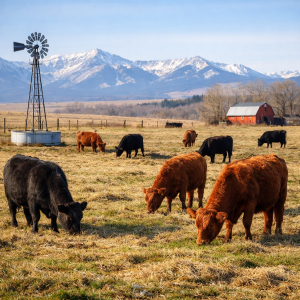
Early spring grazing can help cattle producers reduce feed costs while making better use of pasture resources. By carefully managing stockpiled forage and cool-season grasses, producers can begin grazing earlier in the year and ease the transition from winter feeding to the main grazing season.
According to the 2025 Canadian Cow-Calf Adoption Rates and Performance Levels Report, up to 61 per cent of Canadian producers winter cattle in pastures for all or part of the season. For these operations, early-season grazing can provide an important bridge between winter feeding and spring pasture growth.
“Every bale of hay we don’t feed is money we keep in our pocket,” said Brian Harper, who manages a cow-calf and yearling operation near Brandon, Manitoba. Harper says his cows remain healthier on pasture year-round and benefit from the exercise and steady nutrition grazing provides.
Producers say early-season grazing can offer several benefits, including:
- Extending the grazing seasonReducing feed costs
- Maintaining or improving pasture productivity
- Providing two grazing periods in one season
- Supporting calving management systems
Leah Rodvang, a cow-calf producer from east-central Alberta, said early grazing can also help reduce the risk of scours in newborn calves during May calving.
Managing Grazing Carefully
Timing and rest periods are critical during early spring grazing. At this stage, plants are beginning their growth cycle and rely heavily on root reserves. If too much leaf material is removed, the plant may struggle to recover.
To avoid damaging pastures, producers often use a “skim grazing” strategy. This approach moves cattle through pastures quickly while allowing them to graze less than 50 per cent of the available forage. Leaving enough leaf area behind allows plants to continue photosynthesis and maintain healthy root systems.
Rodvang says planning ahead is essential. “Early-season grazing depends on stockpiled forage, so you have to think about it during the previous growing season to ensure enough forage is available.”
Harper divides his grazing land into three areas: grazing acres, a buffer zone, and stockpiled pasture. The stockpiled section is left to rest for a full season and then used for early spring grazing the following year.
Planning Ahead
Choosing the right pastures can make a big difference. Fields with higher ground and firmer soils are typically better suited for early grazing because they are less prone to damage from hoof traffic.
Many producers rely on tame forage species that begin growing early in the season. Rodvang notes that crested wheatgrass is commonly used on her ranch because it starts growing earlier than many other grasses.
Supplemental feed may still be required depending on forage quality. Testing standing forage and providing additional protein or minerals can help ensure cattle meet their nutritional needs during early spring grazing.
Rodvang recommends producers new to the practice start small.
“Test it on a field you can watch closely,” she said. “Rotate quickly, make sure you have good water access, and learn how much to graze and how much to leave for regrowth.”
A Sustainable Strategy
When managed properly, early-season grazing can help producers lower costs, maintain healthy pastures and improve overall grazing efficiency. By understanding plant growth cycles and allowing adequate rest periods, producers can build a sustainable system that supports both livestock and pasture health.
Information for this article is sourced from the Beef Cattle Research Council. Link to the original release: www.beefresearch.ca/blog/using-stockpiled-forage-for-early-spring-grazing/.
For more information about the Beef Cattle Research Council visit their website at www.beefresearch.ca/.

Two Hills Chronicle published its first issue in December 2020. It serves the communities of Two Hills and County and surrounding areas.