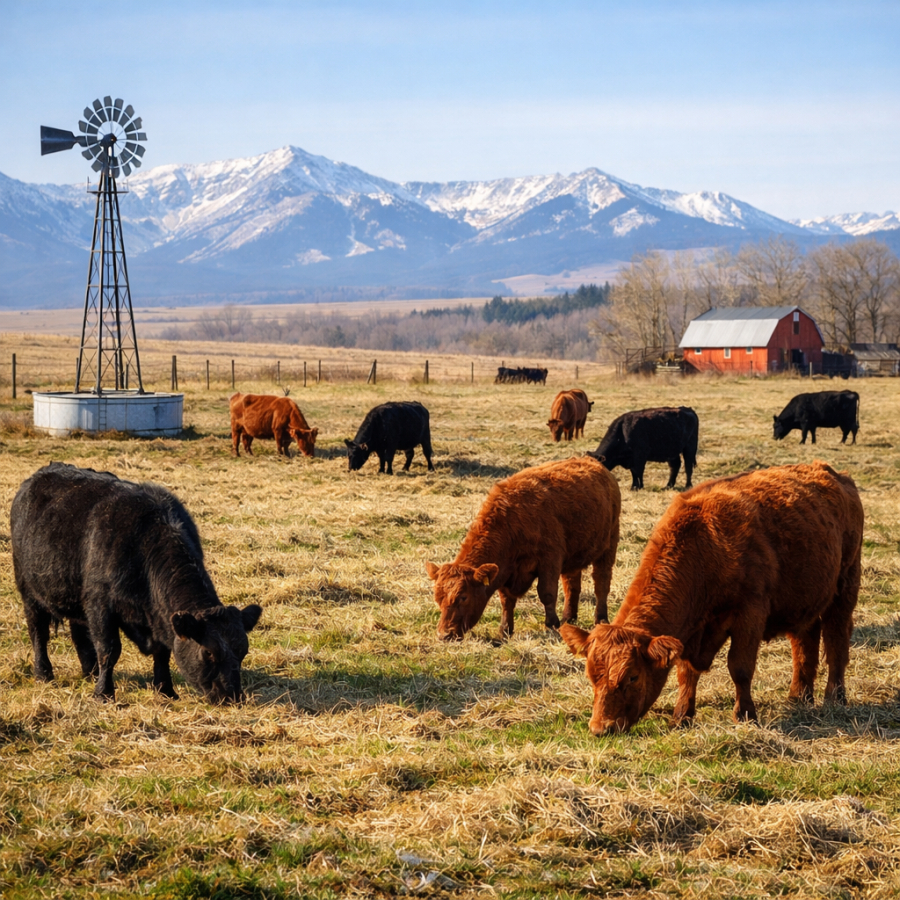
Early spring grazing can help cattle producers reduce feed costs while making better use of pasture resources. By carefully managing stockpiled forage and cool-season grasses, producers can begin grazing earlier in the year and ease the transition from winter feeding to the main grazing season.
According to the 2025 Canadian Cow-Calf Adoption Rates and Performance Levels Report, up to 61 per cent of Canadian producers winter cattle in pastures for all or part of the season. For these operations, early-season grazing can provide an important bridge between winter feeding and spring pasture growth.
“Every bale of hay we don’t feed is money we keep in our pocket,” said Brian Harper, who manages a cow-calf and yearling operation near Brandon, Manitoba. Harper says his cows remain healthier on pasture year-round and benefit from the exercise and steady nutrition grazing provides.
Producers say early-season grazing can offer several benefits, including:
- Extending the grazing seasonReducing feed costs
- Maintaining or improving pasture productivity
- Providing two grazing periods in one season
- Supporting calving management systems
Leah Rodvang, a cow-calf producer from east-central Alberta, said early grazing can also help reduce the risk of scours in newborn calves during May calving.
Managing Grazing Carefully
Timing and rest periods are critical during early spring grazing. At this stage, plants are beginning their growth cycle and rely heavily on root reserves. If too much leaf material is removed, the plant may struggle to recover.
To avoid damaging pastures, producers often use a “skim grazing” strategy. This approach moves cattle through pastures quickly while allowing them to graze less than 50 per cent of the available forage. Leaving enough leaf area behind allows plants to continue photosynthesis and maintain healthy root systems.
Rodvang says planning ahead is essential. “Early-season grazing depends on stockpiled forage, so you have to think about it during the previous growing season to ensure enough forage is available.”
Harper divides his grazing land into three areas: grazing acres, a buffer zone, and stockpiled pasture. The stockpiled section is left to rest for a full season and then used for early spring grazing the following year.
Planning Ahead
Choosing the right pastures can make a big difference. Fields with higher ground and firmer soils are typically better suited for early grazing because they are less prone to damage from hoof traffic.
Many producers rely on tame forage species that begin growing early in the season. Rodvang notes that crested wheatgrass is commonly used on her ranch because it starts growing earlier than many other grasses.
Supplemental feed may still be required depending on forage quality. Testing standing forage and providing additional protein or minerals can help ensure cattle meet their nutritional needs during early spring grazing.
Rodvang recommends producers new to the practice start small.
“Test it on a field you can watch closely,” she said. “Rotate quickly, make sure you have good water access, and learn how much to graze and how much to leave for regrowth.”
A Sustainable Strategy
When managed properly, early-season grazing can help producers lower costs, maintain healthy pastures and improve overall grazing efficiency. By understanding plant growth cycles and allowing adequate rest periods, producers can build a sustainable system that supports both livestock and pasture health.
Information for this article is sourced from the Beef Cattle Research Council. Link to the original release: www.beefresearch.ca/blog/using-stockpiled-forage-for-early-spring-grazing/.
For more information about the Beef Cattle Research Council visit their website at www.beefresearch.ca/.
