

twohillschronicle@26
Albertans Help Shape New Disability Assistance Program
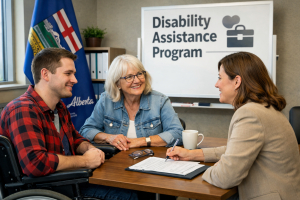
Province says feedback from residents helping guide development of ADAP ahead of July launch
Alberta’s government says feedback from residents is helping shape a new disability support program designed to provide more flexibility for those who want to pursue employment while continuing to receive assistance.
The proposed Alberta Disability Assistance Program (ADAP) is currently being developed by the province’s Ministry of Assisted Living and Social Services. The program will be offered alongside the existing Assured Income for the Severely Handicapped (AISH) program and is scheduled to launch July 1.
According to the province, consultations with Albertans with disabilities, advocacy groups and service providers have played a key role in shaping the program’s development.
“Your feedback is directly helping to shape this program, and helping ensure we get this right for our friends and neighbours who will rely on it,” said Minister of Assisted Living and Social Services Jason Nixon in a statement thanking Albertans who participated in the engagement process.
One of the key changes announced as part of the program’s development is an increase to the employment income exemption for single clients receiving ADAP. Individuals will be able to earn up to $700 per month before their employment income begins to affect their financial benefits.
The province says Albertans enrolled in ADAP will also be able to earn more than $45,000 annually while continuing to receive financial assistance, which it notes would be the highest employment income limit among comparable disability assistance programs in Canada.
Health benefits will remain available to recipients regardless of their employment income, according to the ministry.
The government also confirmed that certain current AISH recipients will automatically remain on the existing program unless they choose to move to ADAP. This includes individuals with severe developmental disabilities, those receiving palliative care, residents of continuing care homes and people aged 60 and older.
For those who transition to ADAP but later wish to return to AISH, the province says it will cover the cost of one medical reassessment, with no time limit on when that support can be accessed.
The new program has been shaped through more than a year of engagement with medical professionals, disability advocates, service providers and Albertans living with disabilities and their families.
According to the province, thousands of Albertans participated in the process through surveys, written submissions, public tele-town halls, online resources and meetings with advocacy groups.
Further details about the Alberta Disability Assistance Program will be outlined in regulations expected to be released later this spring. The program is currently scheduled to launch July 1.
For more information about the Alberta Disability Assistance Program visit the Government of Alberta website at www.alberta.ca/alberta-disability-assistance-program.
Mental Health Monday: You Are Not Alone

Sometimes life feels heavy. Tasks pile up, emotions build, and it’s easy to feel like you’re carrying the weight by yourself. But you don’t have to.
There are plenty of people who want to help you, but they can’t unless you reach out. It’s okay to ask for help; there are many ways in which people can give it. Reaching out can feel scary at first, but once you get past the initial discomfort, it feels good to connect with others who care — sharing their experiences, advice, or resources to support your journey.
Why reaching out works:
- Talking to someone can reduce stress levels by up to 30% and help your body recover faster from daily pressures.
- It activates parts of your brain associated with emotional regulation and resilience, helping you feel calmer and more in control.
- People who seek support are more likely to develop healthy coping strategies and feel less isolated, scared, or overwhelmed.
It’s true: the first step to healing is to talk. Talk to someone you trust, someone who understands you, someone who will listen without judgment, and someone who can help guide you. If you don’t feel ready to speak with someone you know, consider a professional counsellor or therapist — or a free, confidential service like Recovery Alberta, which provides support for people in need.
“Sharing what we go through is how we lighten our burden and find our strength.”
— Unknown
When you share your thoughts and emotions, it provides immense relief. You release pent-up feelings, gain validation, and start to feel less isolated and alone. You also open the door to new perspectives and advice — helping you see things from different angles and make more informed decisions.
You don’t need to suffer in silence. There are many organisations and people dedicated to supporting you. This week, make it your mission to reach out and speak to someone about what’s happening in your life. Once you take that step, you’ll feel better — and you’ll be reminded that support, understanding, and connection are always within reach.
If you of anyone you know needs help visit the Recovery Alberta website at https://www.recoveryalberta.ca/page14060.aspx. There are many resources available to those who may be struggling to find balance under pressure.
Province marks International Women’s Day

Alberta is recognizing the achievements and contributions of women and girls across the province as communities observe International Women's Day on March 8.
In a statement marking the occasion, Tanya Fir, Alberta’s Minister of Arts, Culture and Status of Women, said the day is an opportunity to recognize the impact women have had in shaping the province’s social, cultural and economic story.
“For generations, women have defined Alberta's social, cultural and economic story,” Fir said. “Today, on International Women’s Day, we honour the strength, vision and courage of women and girls whose contributions have left a lasting impact in Alberta and around the world.”
Fir noted the provincial government continues to focus on initiatives aimed at supporting the advancement and safety of women and girls, including programs that encourage participation in fields where women have traditionally been underrepresented.
Scholarship opportunities such as the Women in STEM, Persons Case and Women in Technical and Applied Arts scholarships are designed to help women pursue careers in high-demand industries and expand their opportunities in the workforce.
The minister also pointed to Alberta’s 10-year strategy to end gender-based violence, which aims to enhance supports for survivors, improve community safety and help women build stable futures.
Fir added that the day also serves as a reminder of the many women who have helped shape Alberta’s history and communities.
“On International Women’s Day, we celebrate the women and girls who lead, create and inspire those around them every day,” she said. “From the Famous Five to the women shaping our communities today, together we are building an even brighter and stronger future for Alberta.”
International Women’s Day is celebrated annually on March 8 and highlights the achievements of women while encouraging continued progress toward equality worldwide.
Team Alberta North Set for Arctic Winter Games in Whitehorse

Young athletes from northern Alberta are preparing to represent their communities on an international stage as Team Alberta North heads to the 2026 Arctic Winter Games in Whitehorse, Yukon.
The Games will take place from March 8 to 15, bringing together more than 2,000 athletes, coaches and cultural participants from across the circumpolar North. Teams will compete in a week-long celebration of northern sport, culture and tradition.
Competitors representing Team Alberta North will face teams from Alaska, Greenland (Kalaallit Nunaat), Sápmi in northern Scandinavia, the Northwest Territories, Nunavik in northern Quebec, Nunavut and the Yukon.
The Government of Alberta has invested more than $980,000 to support the province’s delegation of 282 athletes, cultural performers, coaches and mission staff. Funding helps cover athlete training and selection, travel to and from the Games, as well as team operations.
“Congratulations and good luck to all the athletes competing at the Arctic Winter Games,” said Andrew Boitchenko, Alberta’s Minister of Tourism and Sport. “When you wear that Alberta blue, you carry with you the spirit of the North. I encourage all Albertans to cheer on Team Alberta North as they compete and celebrate northern sport and culture.”
Athletes will compete in 20 sports, ranging from badminton, curling and hockey to unique northern competitions such as Arctic Sports and Dene Games. These traditional events include the Alaskan high kick, knuckle hop, one-hand reach, pole push and snow snake, reflecting the region’s heritage and athletic traditions.
Participants on Team Alberta North earned their place through competitive selection camps held across northern communities above the 55th parallel, representing 29 communities throughout the region.
Michelle Deering, chef de mission for Team Alberta North, said the event provides young athletes with a valuable opportunity to compete internationally while celebrating northern culture.
“The Arctic Winter Games are a unique opportunity for our northern athletes and cultural participants to compete on an international stage while celebrating shared culture and values,” Deering said. “It is a proud moment for the participants and their communities and an important step in their athletic development.”
Biathlon skier Tula Sundholm will serve as Team Alberta North’s flag bearer during the opening ceremonies.
“I feel very honoured to have been chosen to carry the flag for Team Alberta North,” Sundholm said. “This is my third Games and after changing sports from Alpine to Biathlon, I’m very excited to compete against people I would normally not and to ski somewhere new. Hopefully I can ski fast, shoot clean and do some pin trading in Whitehorse.”
Athletes at the Games will compete for gold, silver and bronze Ulu medals, inspired by the traditional all-purpose knife historically used by Inuit women and symbolizing the cultural roots of the Arctic Winter Games.
Team Alberta North enters the competition with strong momentum. At the 2024 Arctic Winter Games in Mat-Su, Alaska, the team finished third overall, earning 122 podium finishes.
The Arctic Winter Games are held every two years and have included Alberta athletes since 1986. The province has hosted the event four times, including in Slave Lake (1994), Grande Prairie (2010), and Wood Buffalo (2004 and 2023).
Livestream coverage of the 2026 Arctic Winter Games will be available online through Hometeam Live.
For more information or to find out where to stream visit www.awg2026.org/.
Alberta Launches Wildfire Mitigation Strategy to Strengthen Community Protection
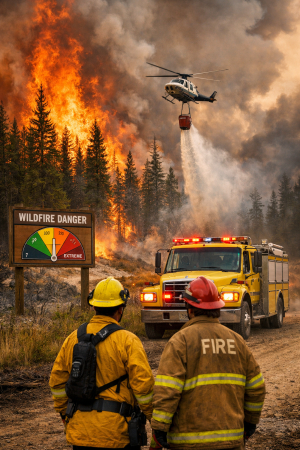
Alberta’s government has introduced a new strategy aimed at reducing wildfire risk and strengthening protection for communities, forests and critical infrastructure across the province.
The Alberta Wildfire Mitigation Strategy outlines a long-term plan designed to improve preparedness, enhance wildfire prevention efforts and support collaboration between government agencies, municipalities, Indigenous communities and industry partners.
According to the province, the strategy aligns with the national Canadian Wildland Fire Prevention and Mitigation Strategy, while also addressing Alberta’s unique landscape, environmental conditions and community needs.
Minister of Forestry and Parks Todd Loewen said the plan is focused on improving public safety and ensuring Albertans are better prepared for wildfire threats.
“Mitigating the negative impacts of wildfires on our communities, forests and infrastructure is a key priority for Alberta’s government,” said Loewen. “Through the Alberta Wildfire Mitigation Strategy, we will strengthen public safety and help people living in Alberta become better informed and prepared for wildfire.”
The strategy outlines six primary focus areas designed to guide wildfire prevention and preparedness efforts moving forward. These include increasing public knowledge of wildfire risks, strengthening partnerships with communities and Indigenous groups, reviewing legislation and governance, investing in technology and innovation, integrating wildfire mitigation into landscape planning, and prioritizing hazardous fuels management.
Officials say the approach builds on existing wildfire mitigation programs already operating in the province.
In recent years, Alberta has expanded its Community Fireguard Program, increased the adoption of FireSmart practices, and introduced new technologies to help detect and respond to wildfire threats more quickly.
The province says these initiatives have already produced measurable results.
Since 2013, funding has supported the completion of 630 FireSmart projects across 178 communities in Alberta. In 2025 alone, Forestry and Parks carried out 20 hazard-reduction burns and one prescribed burn aimed at improving wildlife habitat, covering a total of 1,051 hectares.
The province also introduced the Community Hazardous Fuels Reduction Program in 2025, which removed more than 1,300 hectares of hazardous fuels around some of Alberta’s most at-risk communities.
Utility providers are also working with the province as part of broader wildfire prevention efforts.
Owners and operators of electric transmission and distribution networks in high-risk areas — AltaLink, ATCO and FortisAlberta — have formed the Alberta Wildfire Utility Coalition to support wildfire mitigation initiatives.
In a joint statement, the coalition said it looks forward to collaborating with the province and community partners to improve wildfire preparedness and resilience.
“As wildfires become more frequent and severe, the owners and operators of the electric transmission and distribution networks in Alberta’s highest-risk areas have formed the Alberta Wildfire Utility Coalition,” the statement said. “The coalition supports the Alberta Wildfire Mitigation Strategy and looks forward to working with the Government of Alberta and our community partners to focus on preparation, resilience and mitigation efforts that can reduce the likelihood and the impact of wildfires.”
Wildfire experts say coordinated prevention efforts are becoming increasingly important as climate conditions contribute to longer and more intense wildfire seasons.
Hannah Swift, director of prevention and mitigation with the Canadian Interagency Forest Fire Centre, said Alberta’s strategy represents an important step toward a broader national effort.
“Alberta’s Wildfire Mitigation Strategy is a meaningful step in Canada’s collective effort to reduce risk from wildland fire,” said Swift. “By aligning provincial action with the Canadian Wildland Fire Prevention and Mitigation Strategy, Alberta is advancing a whole-of-society approach that strengthens community resilience and prioritizes proactive, risk-based mitigation.”
Alberta’s forests cover more than 60 per cent of the province, supporting significant ecological, cultural and economic activity. The province has committed $15 million in community fireguard funding for the 2025–26 fiscal year as part of its wildfire preparedness efforts.
Provincial officials say continued cooperation between governments, communities, industry and residents will be essential in reducing wildfire risks and protecting Albertans in the years ahead.
Alberta seeks nominations for 2026 Immigrant Impact Awards

Albertans are being encouraged to nominate individuals who have made significant contributions to their communities as nominations open for the 2026 Alberta Immigrant Impact Awards.
The awards recognize newcomers who have helped strengthen the province through achievements in fields such as business, academics, arts, sports and community leadership. According to the provincial government, immigrants continue to play an important role in shaping Alberta’s communities and supporting economic growth.
“The contributions of immigrants have a vital impact on Alberta’s success and keeping it a welcome place for all,” said Associate Minister of Multiculturalism Muhammad Yaseen in a statement announcing the awards.
“Whether through supporting businesses, driving innovation or volunteering in their communities, it is important to recognize and celebrate the positive impact newcomers have on our province.”
The Alberta Immigrant Impact Awards highlight individuals who were born outside Canada but have made meaningful contributions to Alberta society. Nominees may come from a wide range of backgrounds, including youth leaders, entrepreneurs, artists, athletes, academics and community volunteers.
This year’s awards include eight categories:
- Arts and Sports
- Career and Academics Contribution
- Entrepreneurial Spirit
- Immigrant Excellence
- Inclusive Workplaces
- Small Community Enhancement
- Immigrant Women’s Impact
- Young Leader
More than one recipient may be recognized in each category.
To be eligible, nominees must have been born outside Canada and currently reside in Alberta as a permanent resident or Canadian citizen. Nominees must also have made a positive contribution to the economic or social fabric of the province.
Nominations opened March 3 and will remain open until noon on May 12. Award recipients will be recognized at an event planned for fall 2026.
Albertans interested in submitting a nomination can find more information and access the nomination portal on the provincial government website at www.alberta.ca/alberta-immigrant-impact-awards.
FCC Convenes $5 Billion Coalition to Accelerate Investment in Canadian Agriculture and Food

Canada’s agriculture and food sector is poised for a major financial boost following an announcement from Farm Credit Canada (FCC) that it has convened a coalition of more than 20 investment organizations prepared to deploy up to $5 billion into agricultural and food innovation by 2030.
The announcement marks what FCC describes as a generational investment opportunity for the sector and, when combined with an earlier $2 billion commitment made in May 2025 by its investment arm, FCC Capital, represents a total of $7 billion in new investment expected to flow into Canadian agriculture and food systems by the end of the decade.
According to FCC, the coalition’s pledge builds on growing momentum within the industry to modernize, scale innovation and strengthen Canada’s long-term food security. FCC Capital is already on track to deploy $325 million in new capital during its fiscal year ending March 31, 2026.
Driving Innovation from Farm to Market
The funding is expected to support a broad range of initiatives, including:
- Investments in innovative Canadian agribusinesses
- Construction and project finance opportunities
- Early-stage ag-tech companies
- Commercialization of new technologies
- Productivity improvements across the agricultural value chain
In 2021, total estimated annual investment in agricultural innovation in Canada stood at approximately $270 million, according to RBC Thought Leadership. The newly announced coalition aims to dramatically increase that figure and accelerate the scaling of world-leading agricultural technologies.
For producers across rural Alberta and beyond, including communities throughout east-central Alberta, the announcement signals increased access to capital that could drive modernization, efficiency and competitiveness.
Leadership Responds
“Canada’s farmers, producers, and processors are already among the most innovative and entrepreneurial in the world,” said Darren Baccus, Executive Vice-President, Agri-Food, Alliances and FCC Capital. “By bringing this coalition together, we’re crowding in the capital needed to scale breakthrough solutions and deliver the next generation of innovation directly to Canadian producers.”
Baccus added that the initiative strengthens domestic food security while positioning Canada as a global agri-food leader.
Federal Agriculture and Agri-Food Minister Heath MacDonald described the coalition as a landmark investment.
“Agriculture is one of the most important and investable sectors of our economy,” he said. “This landmark investment will strengthen Canada’s leadership in agriculture and agri-food innovation, while charting a course for long-term growth, competitiveness, and resiliency for generations to come.”
Coalition Members
The coalition includes a range of Canadian and international investment firms:
- Area One Farms
- Arterra Growth
- Bonnefield Financial
- District Ventures Capital
- Emmertech
- Glengarry Farm Finance Corporation
- InvestEco Capital Corp.
- Maverix Private Equity
- Nàdarra Ventures
- Northleaf Capital Partners
- NYA Ventures
- Power Sustainable Lios
- Radicle Growth
- Royal Bank of Canada
- S2G Investments
- Seminal Capital Holdings, LLC
- SVG Ventures
- Tall Grass Ventures
- Tikehau Capital
- Yaletown Partners
About FCC
FCC is a commercial Crown corporation wholly invested in Canadian agriculture and food. The organization provides financing and capital solutions while reinvesting profits back into the industry and rural communities it serves.
Alberta Marks Fraud Prevention Month as Scams Grow More Sophisticated

The Government of Alberta is recognizing March as Fraud Prevention Month, urging residents to stay alert as scams become increasingly complex and difficult to detect.
Minister of Service Alberta and Red Tape Reduction Dale Nally issued a statement March 2 emphasizing that no one deserves to be taken advantage of and that education remains the strongest defence against fraud.
“Whether it is a phone call, a text, an email or an online ad, fraudsters constantly adapt their tactics to exploit trust,” Nally said. “When people know what to look for, they are better able to recognize, reject and report fraud before it causes real harm.”
A Hidden Crime
This year’s theme, Hidden Crime, highlights the reality that fraud remains one of the most under-reported crimes in Canada, despite the significant financial and emotional damage it can cause.
According to provincial officials, scammers continue to evolve their strategies, increasingly using sophisticated technology — including artificial intelligence — to create convincing impersonations, fake websites and highly targeted messaging campaigns.
Rural residents, seniors and small business owners are often among those most affected. Fraud can take many forms, including:
- Phishing emails or text messages requesting personal information
- Investment scams promising unrealistic returns
- Romance scams targeting individuals through social media
- Impersonation scams involving fake government or banking officials
- Online marketplace and classified ad fraud
Officials stress that staying informed about emerging tactics can significantly reduce risk.
Reporting Fraud
Albertans who encounter a scam or suspect fraudulent activity are encouraged to report it immediately.
Incidents can be reported to local police or to the Canadian Anti-Fraud Centre, which collects data on scams and provides resources to help prevent further victimization.
If a business is suspected of unfair practices or fraud, residents can contact Alberta’s Consumer Investigations Unit (CIU) at 1-877-427-4088. The unit reviews consumer complaints for compliance with consumer protection and tenancy laws and assesses potential violations, including serious cases that may involve criminal offences.
Provincial officials note that reporting fraud is critical, even if financial loss did not occur. Reporting helps authorities track emerging patterns and warn others before additional victims are affected.
Education as Prevention
Alberta has officially recognized Fraud Prevention Month for more than two decades, using the initiative to raise awareness and provide practical tools to residents.
“Education is our best defence,” Nally stated. “As fraud tactics continue to evolve, staying informed is one of the strongest protections we have.”
Government resources include online guides on identifying common scams, tips for protecting personal information and instructions on how to safely verify suspicious communications.
Residents are encouraged to:
- Avoid clicking links in unsolicited messages
- Verify the identity of anyone requesting personal or financial information
- Use strong, unique passwords for online accounts
- Enable multi-factor authentication where available
- Discuss scam awareness with family members, particularly seniors
Growing Sophistication
Officials warn that artificial intelligence has made scams more convincing than ever. Fraudsters are now able to generate realistic voice recordings, create convincing fake identities and produce professional-looking documents within minutes.
This increased sophistication makes vigilance essential.
Authorities recommend slowing down before responding to urgent requests for money or personal details, particularly those claiming to be from financial institutions, government agencies or family members in distress.
In many cases, legitimate organizations will never demand immediate payment through unconventional methods such as gift cards, cryptocurrency or wire transfers.
Community Awareness
Fraud Prevention Month serves as a reminder that community awareness plays a critical role in prevention.
By sharing information about current scams and encouraging open conversations about fraud attempts, communities can help protect vulnerable residents and reduce overall impact.
Officials encourage Albertans to explore available online resources and take proactive steps to safeguard themselves and their families throughout the year.
For more information about fraud and consumer protection visit the Government of Alberta website at www.alberta.ca/consumer-protection.
Mental Health Mondays: The Body Whispers Before It Screams

The body whispers before it screams.
Tight shoulders that never quite relax.
A mind that refuses to switch off at night.
Irritability that feels slightly out of character.
A kind of tiredness that sleep alone doesn’t fix.
We often brush these things off as “just a busy week.” But sometimes, they are early warning signs. And in a world that rewards constant productivity, many of us have forgotten how to listen.
Taking time out is not laziness. It is maintenance.
The Slow Build of Burnout
Burnout rarely arrives in dramatic fashion. It doesn’t usually knock loudly at the door. Instead, it builds slowly — one late night, one skipped break, one “I’ll deal with it later” at a time.
The World Health Organization recognizes burnout as an occupational phenomenon resulting from chronic workplace stress that has not been successfully managed. While many associate burnout strictly with careers, the reality is broader. Parents, caregivers, students, small business owners, community volunteers — anyone who carries responsibility without adequate recovery — can feel its effects.
Chronic stress increases cortisol, the body’s primary stress hormone. Elevated cortisol over time can affect sleep, concentration, immune function and mood. In simple terms: when we do not pause, the body eventually forces us to.
And by the time it is forcing us, the whisper has become a scream.
Why We Struggle to Pause
For many people, especially in tight-knit communities, rest can feel uncomfortable.
There is pride in being dependable. Pride in being the one who shows up, who pushes through, who handles things. We tell ourselves we will slow down “once things settle.” The problem is — things rarely settle on their own.
There is also guilt.
Guilt for not being productive.
Guilt for saying no.
Guilt for needing space.
We have quietly adopted the belief that being constantly busy is a sign of value. That exhaustion equals importance. That if we are not doing something, we are falling behind.
But the truth is this: a tired mind makes poor decisions. An overwhelmed heart becomes reactive. A constantly stretched person eventually snaps.
Rest is not weakness. It is wisdom.
What Taking Time Out Actually Means
Taking time out does not have to mean booking a two-week vacation or disappearing from responsibilities. For most people, that is simply not realistic.
It can look much smaller — and far more sustainable.
It might mean:
- Ten minutes of silence in the morning before the phone lights up.
- A short walk without headphones, just noticing the air and your breathing.
- Turning off notifications after a certain hour.
- Saying “I can’t commit to that right now” without over-explaining.
- Choosing one evening a week that is intentionally unstructured.
Research consistently shows that short, intentional breaks improve cognitive performance and emotional regulation. Even brief periods of recovery allow the nervous system to reset. When we step away, we often return clearer, calmer and more effective.
Stepping back is not falling behind. Often, it is the very thing that keeps us steady.
The Cost of Ignoring the Signs
When we ignore stress for too long, it does not simply disappear. It tends to surface in other ways:
- Difficulty sleeping
- Increased irritability
- Headaches or muscle tension
- Loss of motivation
- Emotional numbness
These are not character flaws. They are signals.
Mental health is not separate from physical health. The mind and body are deeply connected. Prolonged emotional strain can manifest physically, just as physical exhaustion can affect mood and outlook.
Listening early prevents larger consequences later.
A Small Challenge for This Week
This Mental Health Monday, consider a simple challenge:
Choose one small boundary and protect it.
It could be:
- No phone during dinner.
- Five minutes of deep breathing before bed.
- A short walk after work.
- One honest conversation about how you are actually feeling.
You do not need to overhaul your entire life in one week. Change rarely works that way. But consistent, small adjustments create resilience over time.
Ask yourself:
When was the last time I truly switched off?
Not scrolled. Not distracted. Not half-rested.
Actually switched off.
If you cannot remember, that may be your answer.
Learning to Listen Again
The body whispers before it screams.
It whispers through fatigue. Through tension. Through quiet emotional signals we are tempted to ignore. Slowing down long enough to notice those whispers is not indulgent — it is responsible.
Communities thrive when the people within them are well. Families are stronger when individuals feel balanced. Work improves when minds are clear.
Taking time out is not about escaping life. It is about sustaining it.
This week, give yourself permission to pause — not because everything is falling apart, but so that it doesn’t.
Sometimes the strongest thing a person can do is rest before they are forced to.
Measles exposure alert issued for Sherwood Park hospital

Residents who were at a Sherwood Park hospital earlier this month are being advised to monitor for symptoms following a confirmed measles exposure.
Alberta Health Services has issued a public alert for individuals who were present at the Strathcona Community Hospital Emergency Waiting Room (9000 Emerald Drive, Sherwood Park) on:
February 16, 2026
1:40 p.m. – 4 p.m. (MST)
Anyone who attended the location during that time and was born in or after 1970 — and who has received fewer than two documented doses of measles-containing vaccine or has never had measles — may be at risk.
What to watch for
Measles is an extremely contagious disease that spreads easily through the air.
Symptoms may include:
- Fever of 38.3 C or higher
- Cough, runny nose and/or red eyes
- A rash appearing three to seven days after fever begins
The rash typically starts behind the ears and on the face before spreading down the body. On lighter skin tones, it appears red and blotchy. On darker skin tones, it may appear purple, darker than surrounding skin, or may be harder to see.
What to do
Anyone who develops symptoms is advised to stay home and call the measles hotline at 1-844-944-3434 before visiting any healthcare facility, including a family doctor’s office or pharmacy.
The measles vaccine is highly effective at preventing infection and complications. In Alberta, it is offered free of charge through the province’s publicly funded immunization program. The recommended schedule includes two doses — the first at one year of age and the second at 18 months.
Albertans who are unsure of their immunization status can:
- Call the measles hotline at 1-844-944-3434
- Text “Measles” to 88111
- Access their immunization history through My Health Record (for individuals 14 and older)
More information is available at alberta.ca/measles.

Two Hills Chronicle published its first issue in December 2020. It serves the communities of Two Hills and County and surrounding areas.