

twohillschronicle@26
Canadian BMX Championships Return to St. Albert This Weekend

(Image generated using AI)
St. Albert is getting ready to welcome some of Canada’s top BMX riders as the 2026 Canadian BMX Championships take place Aug. 29-30.
The two-day competition will bring athletes from across the country to Alberta’s only Supercross BMX track, where riders will compete for Canadian championship jerseys and Canada Cup Series titles.
The Government of Alberta is providing more than $54,000 through its Major Sport Events grant program to support the championships, which are being organized by the St. Albert BMX Association.
The event is expected to attract more than 860 participants, including approximately 760 athletes, coaches and technical officials, along with 100 volunteers. Organizers also anticipate more than 5,000 spectators from across Canada will attend.
That influx of visitors is expected to generate an estimated $100,000 in economic activity for local businesses, hotels and restaurants.
“Canadian BMX Championships highlight the passion, determination and excellence that define high performance cycling in Canada,” said Andrew Boitchenko, Alberta’s Minister of Tourism and Sport. “Alberta is proud to support this event as it brings top athletes to St. Albert, creates economic benefits for the community and provides opportunities for riders to compete on one of the country's premier BMX tracks.”
The championships will also give Alberta riders an opportunity to compete on home soil against some of the country's best.
Among the competitors will be Red Deer’s Molly Simpson, an eight-time Canadian national champion and Olympian, and Calgary’s Logan Lee, the reigning world champion in her age category.
For Alberta’s BMX community, the weekend represents more than just a competition. Hosting a national championship provides local riders with the opportunity to experience high-level racing close to home while giving the province’s BMX organizations a chance to showcase their facilities and build interest in the sport.
“The Championships give athletes the opportunity to showcase their talent and hard work on the national stage while competing against the country’s top contenders,” said Kris Mitschke, president of the St. Albert BMX Club. “The St. Albert BMX Club is proud to host this event with support from the community and the Government of Alberta.”
The Government of Alberta says its Major Sport Events grant program is designed to help communities host national and international competitions that attract visitors, support youth sport development and strengthen local sporting organizations.
With hundreds of athletes arriving in St. Albert and thousands of spectators expected throughout the weekend, the Canadian BMX Championships are set to put Alberta BMX firmly in the spotlight.
For two days, St. Albert will be the place to be for BMX fans as Canada’s top riders battle for national honours.
(Source: Government of Alberta)
Shoulders of Giants: Jeannie - Actions Have Consequences

(Image generated using AI)
Throughout my working life, I have had the pleasure and privilege of working with some remarkable people who have taught me invaluable lessons. Some lessons came through formal instruction, while others came through experience.
One particular lesson came from Jeannie when I worked at the Two Hills IGA.
Jeannie was one of the managers and my direct supervisor. She commanded respect, was extremely organized, and yet was also a tremendous amount of fun to work with. She knew how to run a store, but she also knew how to work with people.
As tends to happen when you spend a lot of time working alongside people, I became good friends with many of my co-workers. Every now and then, we'd get together outside of work and have a few drinks.
One Friday evening, Jamie, another guy who worked at the store and a good friend of mine, and I decided to grab a few beers and hang out after work. We weren't planning on getting crazy. We were simply going to have a few drinks, relax and enjoy the evening.
When Jeannie saw the case of beer we'd picked up from the liquor store, she laughed.
“Do I need to remind you boys that you're working tomorrow? And Jared, you're working on cash.”
“You know us,” we both replied. “We'll behave and promise to be in top form tomorrow.”
She shook her head, laughed and walked away with the unmistakable look of someone who already knew exactly how this story was going to end.
Then she stopped and turned back to me.
“No matter what condition you come in tomorrow, you're working on cash, and I will not relieve you.”
I looked her straight in the eye and, with complete confidence, said, “I promise I'll be here and I'll work at my best.”
And with that, we closed the store and headed out for the evening.
A few beers turned into a good time. There were plenty of laughs, plenty of conversation and, before we knew it, the case was empty.
But we weren't done.
It was still relatively early, after all.
So naturally, we moved on to the harder stuff.
... And that's about where my memory ends.
The next thing I remember is waking up feeling like it was my first day as a human being.
Jamie wasn't feeling particularly fantastic either, although he seemed to be in considerably better shape than I was. Eventually, we remembered our promise to Jeannie and somehow managed to drag ourselves out to the car and make it to the store on time.
We stumbled through the doors, barely able to keep ourselves upright.
And there was Jeannie.
She immediately started laughing.
“I knew it!” she said, laughing hysterically. “You know you're still working on the till, right?”
“I know,” I replied, hanging my head and accepting my fate.
The morning seemed to last forever.
Every sound inside the store thundered through my head like a gong. The sunlight I normally cherished felt like someone was shining a supernova directly into my eyes.
Fortunately, Jeannie was exceedingly gracious and let me take an early lunch.
I practically sprinted over to Mama's Pizza, ordered a bacon cheeseburger with fries and gravy, and proceeded to inhale it.
By the time I was finished, I was beginning to feel a little more like myself.
I managed to work the rest of the day, although “managed” might be a generous description. Jeannie kept a watchful eye on me to make sure I was okay—and perhaps also because watching me suffer was at least mildly entertaining.
At the time, I mostly thought about surviving the day.
Looking back, however, I realize Jeannie had taught me something that has stayed with me ever since.
Actions have consequences.
I am certainly not going to claim that I never made the same mistake again. I was young, after all. But it happened considerably less frequently.
The lesson wasn't really about drinking. It was about thinking ahead.
Before you do something, take a moment to consider what the result might be. You may enjoy the decision in the moment, but eventually, you have to deal with whatever comes afterward.
Sometimes the consequences are serious.
Sometimes they're painful.
And sometimes, if you're lucky, they involve spending the morning working on a cash register while your manager laughs at you because she knew exactly what was coming.
Jeannie taught me that you don't always need a lecture to learn an important lesson.
Sometimes, you just need someone to let you live with the consequences of your own choices.
And sometimes, that's the lesson you remember for the rest of your life.
Actions have consequences.
New Skilled Trades Training Centre Expands Apprenticeship Opportunities in Grande Prairie
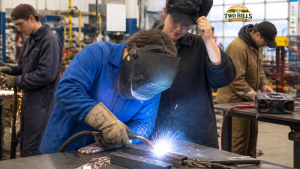
(Image generated using AI)
A new 40,000-square-foot Skilled Trades Training Centre at Northwestern Polytechnic is expanding apprenticeship training opportunities in Grande Prairie as Alberta works to build the skilled workforce needed for the province’s growing economy.
The facility provides dedicated instructional space designed to reflect real-world job sites, giving apprentices access to hands-on, industry-focused training close to home.
The Alberta government says the centre is expected to support training for more than 4,500 apprentices over the next three years, significantly increasing Northwestern Polytechnic’s current capacity of about 1,100 apprentices.
“By investing in trades training in Grande Prairie, we're making sure young people don't have to leave home to build a good career, and that the businesses driving this region forward have the skilled workers they need for the future,” Premier Danielle Smith said.
Northwestern Polytechnic developed its programs in consultation with industry partners, with the goal of ensuring apprentices gain practical experience that prepares them for careers in Alberta’s workforce.
“Investments like this help ensure students gain practical, industry-relevant experience while they learn,” said Myles McDougall, minister of Advanced Education. “Northwestern Polytechnic graduates will leave this centre with the skills, confidence, and job-ready training needed to succeed in Alberta’s workforce.”
Dr. Vanessa Sheane, president and CEO of Northwestern Polytechnic, said enrolment numbers are already demonstrating the demand for trades training in the Grande Prairie region.
“Our enrolment numbers are already confirming the urgent need for this training in Grande Prairie,” Sheane said. “This centre, along with future planned developments, showcases our commitment to Alberta’s signature industries and our students who will go on to be significant contributors in our communities.”
Skilled trades play a major role in Alberta’s economy, providing workers needed to build and maintain homes, roads, schools, hospitals and other infrastructure.
The province says expanding access to high-quality trades training is particularly important in northern Alberta, where demand for skilled workers continues to grow.
The investment is also part of longer-term plans to expand trades education at Northwestern Polytechnic. Through Budget 2025, Alberta’s government provided $1 million for planning toward a planned 2028 development.
That additional centre is expected to include industry-focused training shops and introduce new programming to northern Alberta, including welding, refrigeration and construction.
For students and employers in the region, the expansion represents another step toward ensuring northern Alberta has the skilled workers needed to support its communities and industries for years to come.
For more information about apprenticeship and industry training in Alberta, visit the Government of Alberta website at tradesecrets.alberta.ca.
(Source: Government of Alberta)
Strengthening Primary Care in Rural Alberta

(Image generated using AI)
New funding is helping rural clinics expand their teams and provide more care closer to home.
.Rural communities across Alberta are seeing additional support for primary health care as new provincial funding helps clinics recruit staff, expand services and improve access for patients.
The Alberta government says an additional $9 million has been invested in rural primary care, including nearly $8 million through the Rural Team Recruitment Grant.
In the latest intake, $3.4 million was awarded to 23 clinics across Alberta, supporting 53 new full-time health-care positions in rural and remote communities.
The investment is intended to help rural clinics build stronger, team-based care models so patients can access a wider range of services closer to where they live.
“These grants are about making sure rural Albertans can get the care they need in their own communities,” said Justin Wright, Minister of Primary and Preventative Health Services. “By helping clinics hire more health professionals and grow their teams, we’re making it easier for families to get timely, reliable care closer to home.”
Results Already Being Seen
The province says previous recipients of the Rural Team Recruitment Grant are already reporting improvements in their ability to serve patients.
The Barrhead Family Clinic, which received funding through an earlier round of the program, increased the number of patients it serves by almost 30 per cent after recruiting patient care coordinators.
The Crowsnest Medical Clinic also reported positive results. A social worker hired through the grant has served 98 patients by providing advocacy, care coordination and connections to community resources.
Other rural clinics are using the funding to increase their capacity and strengthen the services available locally.
At the Consort Medical Clinic, funding has helped build capacity within the clinic's primary-care team.
“These grants have helped us build much-needed capacity within the Consort Medical Clinic, strengthening our primary care team and expanding the care we can provide locally,” said Kayla Donohue, clinic manager. “This investment is helping create more sustainable access to primary care for our rural community.”
Municipalities Also Receiving Support
An additional $1 million has been awarded to seven municipalities through the Municipality Supported Clinics Grant program.
The funding is supporting new employees, including medical office assistants, managers, patient navigators and virtual clinic coordinators. It is also being used for medical equipment, staff training and technology.
Funding is going to the towns of Picture Butte, Bruderheim and Bow Island, along with clinics in Lac La Biche County, Bashaw, Delburne and Consort.
The province says the investments are already making a difference.
In Bruderheim, funding has helped extend clinic hours. Bashaw has expanded from two to five clinic days per week and is now offering same-day appointments. In Consort, the clinic has been able to serve 36 per cent more patients.
“Communities across Alberta are benefiting from these investments as clinics bring on additional team members and enhance the high-quality, team-based care that rural families rely on,” said Ron Wiebe, parliamentary secretary for Rural Health.
A Continued Focus on Rural Access
The Rural Team Recruitment Grant program's second intake was added following a strong response to the first intake in 2024.
Through the program, the Alberta government says it is helping fill 105 new health-care positions, giving rural clinics the ability to expand their teams and improve patient access.
Both the Rural Team Recruitment Grant and the Municipality Supported Clinics Grant programs stem from the Rural Health Action Plan and the Modernizing Alberta’s Primary Health Care System (MAPS) report.
Funding is being provided through the Canada-Alberta Agreement to Work Together to Improve Health Care for Canadians, including initiatives focused on rural and remote communities.
For rural Alberta, the goal is straightforward: strengthen local clinics, expand the teams serving patients and make it easier for people to receive the care they need without having to leave their communities.
For more information about the Rural Health Action Plan, visit the Government of Alberta website at www.alberta.ca/rural-health-action-plan.
(Source: Government of Alberta)
Alberta Welcomes First Music Commissioner to Help Grow Province’s Music Industry

(Image generated using AI)
Alberta is taking another step toward strengthening its music industry with the appointment of Jennifer Venance as the province’s first-ever music commissioner.
The appointment is part of the Alberta Music Action Plan, launched earlier this year with the goal of growing the province’s music sector, attracting investment, supporting local artists and creating new opportunities for music-related businesses.
As music commissioner, Venance will serve as a central connection between the provincial government and Alberta’s music community. Her role will include strengthening industry partnerships, supporting business development, promoting Alberta artists and helping create opportunities for musicians and music businesses both within the province and beyond.
“From Paul Brandt to Tate McRae, Alberta has produced some of the world’s best musical acts,” said Tanya Fir, Minister of Arts, Culture and Status of Women. “That’s why we’re proud to welcome Alberta’s first music commissioner, who will help more talented artists succeed and grow an industry that contributes billions of dollars to Alberta’s economy.”
The Alberta Music Action Plan identifies music as both an important contributor to the provincial economy and a source of cultural pride. The new commission is expected to build on that foundation by developing strategic partnerships, promoting Alberta talent and helping artists and businesses reach new audiences and markets.
Venance brings more than 20 years of experience as a musician and music educator to the position. She most recently served as director of K-12 curriculum and French education with Alberta Education and Childcare.
Her background in government, arts education and community engagement gives her experience on both the educational and administrative sides of the sector, while her career as a musician provides firsthand knowledge of the opportunities and challenges facing Alberta artists.
“Music has the power to connect people, strengthen communities and create economic opportunity,” Venance said. “Alberta is home to extraordinary artists, organizations and industry leaders and I am honoured to serve as the province’s first music commissioner.”
Venance said she looks forward to working with the music sector to build on Alberta’s existing strengths, support growth and create new opportunities for Alberta music both at home and around the world.
The Alberta Music Commission will be modelled in part on the province’s Film Commission, with an emphasis on bringing artists, businesses and industry leaders together while helping create an environment where the sector can continue to grow.
Andrew Mosker, president and CEO of the National Music Centre and co-founder and chair of West Anthem, welcomed the appointment.
“Alberta’s music sector is excited to welcome the province’s — and Canada’s — first provincial music commissioner,” Mosker said, describing the move as recognition of the economic and cultural opportunities created by investment in music.
The commission will work with artists, producers, venues, festivals and music retailers, providing the sector with a dedicated advocate focused on partnerships, growth and expanding Alberta’s presence in the music industry.
For a province already known for producing successful artists across a variety of genres, supporters say the initiative could help Alberta’s music industry build on that reputation while creating additional economic and cultural opportunities.
Alberta’s Music Industry by the Numbers
According to the province:
- Alberta’s music sector supports more than 23,000 jobs.
- The sector generates almost $5 billion in economic output annually.
- Music contributes approximately $2.5 billion to Alberta’s GDP.
- The Alberta Music Action Plan was launched April 30 as the first music strategy of its kind in Canada.
- The plan was developed through research, industry studies and roundtable discussions involving representatives from across Alberta’s music sector.
The Alberta Music Commission is expected to help showcase Alberta talent, celebrate industry achievements, advocate for the sector and attract new opportunities and investment to the province.
For Alberta musicians and the businesses that support them, the new position represents another voice at the table — one focused specifically on helping the province’s music industry find its next stage of growth.
(Source: Government of Alberta)
E.T.’s Craft Shop Celebrates Seven Years With Community Anniversary Celebration
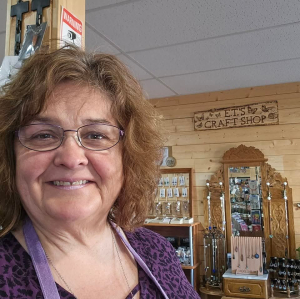
(Ellen Thomas, Owner of E.T.'s Craft Shop)
Seven years of serving the community is certainly something worth celebrating, and E.T.’s Craft Shop is inviting everyone to join in the festivities on Saturday, August 29.
The local business will mark its 7th Anniversary with a full day of vendors, food, entertainment, prizes and community spirit, with activities taking place both inside the seniors hall across the street from E.T.’s Craft Shop on Main Street and in front of the store.
The celebration will feature a vendor market in the seniors hall, where visitors can browse local offerings while enjoying a complimentary piece of slab cake. A Sparkle tattoo station will also be available by donation, along with a large selection of donated door prizes.
E.T.’s Craft Shop has also prepared 75 swag bags for the first 75 customers through the store that day. The giveaway has proven popular in previous years, with the swag bags gone by noon during each of the past two celebrations.
Outside E.T.’s Craft Shop, the road will be closed off, so visitors will be able to enjoy a BBQ featuring hamburgers, chips and drinks by donation, along with additional vendor tables and karaoke.
This year’s celebration will also have a charitable focus. Donations collected throughout the event will be donated to Willingdon Eagle Hill Lodge, allowing the community to celebrate E.T.’s Craft Shop’s anniversary while supporting a local organization.
There will be plenty of other food and refreshments available along Main Street as well. Lickin' Spoon Ice Cream Parlour which serves Foothills Ice Cream will be opening at 11 a.m., offering hot dogs, Polish dogs, banana splits and milkshakes, while Willingdon Hotel Grocery will also be open for the occasion.
The anniversary celebration continues E.T.’s Craft Shop’s tradition of marking important milestones with the community. The business’s fifth anniversary was celebrated at the seniors hall, while last year’s celebration included a street closure.
With vendors, food, entertainment, prizes, giveaways and a charitable cause all coming together, E.T.’s Craft Shop’s 7th Anniversary Celebration promises to be a fun-filled day for the entire community.
Everyone is invited to come out on Saturday, August 29, celebrate seven years of E.T.’s Craft Shop, support the participating vendors and enjoy a day of community spirit.







https://twohillschronicle.com/blog/itemlist/user/1474-twohillschronicle26#sigProIda31ffd1e89
Mental Health Mondays: The Benefits of Doing Nothing

(Image generated using AI)
We live in a world that seems to place a premium on being busy.
There is always something to do, somewhere to be, an email to answer, a chore to finish, a deadline to meet or another goal waiting for our attention. Even when we finally have some free time, we can sometimes feel guilty for using it simply to rest.
But what if doing nothing isn't wasted time?
What if, sometimes, doing nothing is exactly what our minds and bodies need?
Rest Is Not Laziness
There is an important difference between being unproductive and allowing ourselves to rest.
Rest gives the brain an opportunity to step away from constant stimulation and demands. Just as our bodies need time to recover after physical activity, our minds need opportunities to slow down after spending hours processing information, solving problems and dealing with the stresses of everyday life.
Taking some time to sit quietly, listen to music, enjoy a cup of coffee or tea, watch a favourite show, read a book or simply stare out the window isn't necessarily time wasted.
Sometimes, it is recovery.
We Don't Have to Earn Rest
Many of us have learned to think of rest as a reward.
We tell ourselves we'll relax once the house is clean, the work is finished, the emails are answered and everything on our list has been checked off.
The problem is that the list rarely ends.
There will almost always be another task waiting.
If we only allow ourselves to rest when everything is finished, we may never truly give ourselves permission to stop.
Rest doesn't have to be something we earn. It is a basic part of taking care of ourselves.
Doing Nothing Can Give Your Brain Room to Breathe
Constant stimulation can leave us feeling mentally exhausted without necessarily realizing why.
Phones, computers, social media, television, work and everyday responsibilities can keep our attention moving from one thing to another for much of the day.
Quiet moments can provide a break from that constant input.
When we step away from the noise, we may find that our thoughts become clearer. Problems that seemed overwhelming can feel more manageable. We may even discover that our minds naturally begin working through things once we stop forcing ourselves to think about them.
Sometimes the best ideas arrive when we're not actively trying to come up with them.
Small Moments of Nothing Can Make a Difference
Doing nothing doesn't have to mean taking an entire day off.
It can be five or ten minutes sitting outside.
It can be enjoying your morning coffee without checking your phone.
It can be taking a quiet walk without listening to anything.
It can be lying on the couch after a long day and allowing yourself to simply be.
These small moments can give us valuable breathing room.
And for someone who is already feeling overwhelmed, starting small can make rest feel much more achievable.
Rest and Avoidance Aren't the Same Thing
Of course, there is a difference between intentional rest and avoiding everything indefinitely.
If there is something important that needs our attention, ignoring it won't necessarily make the problem disappear. But taking a deliberate break before returning to it can sometimes help us approach it with a clearer head.
The goal isn't to escape our responsibilities.
The goal is to give ourselves enough space to handle them.
Give Yourself Permission to Pause
We don't have to fill every quiet moment.
We don't have to turn every hobby into a side hustle, every free afternoon into a productivity session or every moment of silence into an opportunity to accomplish something.
Sometimes we can simply sit.
Sometimes we can breathe.
Sometimes we can enjoy the moment without needing to justify it.
There is value in doing nothing.
So this week, if you find yourself with a little time and your first instinct is to find something productive to fill it with, consider doing something different.
Put the phone down.
Take a breath.
Sit somewhere comfortable.
Let your mind wander.
Give yourself permission to pause.
You are not wasting time by resting. Sometimes, doing nothing is exactly what allows us to come back stronger, clearer and ready for whatever comes next.
If you or someone you know is struggling with persistent stress, anxiety, depression or other mental health concerns, consider reaching out to a qualified mental health professional or a trusted support person.
Flood Resilience Investments Prove Their Worth Across Alberta

(Image generated using AI)
Alberta’s flood mitigation investments are being put to the test during a year of severe weather, with projects across the province helping protect communities, homes and critical infrastructure from the impacts of flooding.
Multiple heavy rainfall events, including historic rainfall in some areas, combined with a challenging spring breakup of ice cover on northern rivers, have tested Alberta’s ability to respond to rising water levels.
According to the Alberta government, investments in flood resilience have helped reduce those impacts and prevent serious damage in several communities.
Through the $125-million Drought and Flood Protection Program, launched in 2024, the province is investing in flood protection, public safety and infrastructure designed to help communities withstand conditions that could previously have resulted in significant damage.
“Alberta has faced a challenging spring and summer of severe weather, and our investments in flood resilience are delivering results,” said Grant Hunter, Minister of Environment and Protected Areas. “Working with municipal and Indigenous leaders, we are strengthening public safety and building resilient communities.”
The province says the approach to flood protection has evolved significantly since the devastating 2013 southern Alberta floods. Government, municipalities, emergency managers and Albertans now have access to improved information and tools, while additional water storage and strategically located flood barriers are helping reduce risks.
Calgary Sees Benefits of Major Flood Projects
In Calgary, the Springbank Off-stream Reservoir was used for the first time to divert high flows from the Elbow River upstream of the city.
Updated flood maps now show a significantly reduced flood risk along the Elbow River as a result of Springbank and other mitigation projects.
The Ghost Reservoir was also used several times on the Bow River to reduce river flows through Calgary, helping lower flood risks for the city and downstream communities.
Calgary Mayor Jeromy Farkas said the experience demonstrates the importance of long-term investment and cooperation between the city and province.
“Calgary knows firsthand the devastating impact flooding can have on families, businesses and our entire community,” Farkas said.
He added that flood mitigation investments made through partnerships between the two levels of government are helping protect residents, the local economy and critical infrastructure.
Canmore Projects Put to the Test
Mountain communities also saw flood mitigation projects tested by significant rainfall.
In Canmore, the Cougar Creek Dam, a debris flood retention structure supported by approximately $46 million in provincial funding, captured debris and excess water during high flows.
The structure helped reduce the force of the water and debris reaching the community.
Additional debris mitigation structures on nearby Exshaw Creek, Heart Creek and Jura Creek were also activated.
Canmore Mayor Sean Krausert said it was the first time since the 2013 floods that the community's extensive flood mitigation system had been tested against significant rainfall in its steep creeks.
He credited provincial funding for helping the community successfully manage the debris flow while providing greater reassurance to residents.
Updated Mapping Helps Fort McMurray
In northern Alberta, flood preparedness took on a different challenge during the spring breakup of ice on the Athabasca and Clearwater rivers.
Recently updated flood mapping in Fort McMurray, including specific mapping related to ice jams, helped inform the community's response.
A $661,000 investment in flood mapping provided the Regional Municipality of Wood Buffalo with better information to prepare for and respond to this year's ice-jam event.
The province noted that similar water levels in 1997 resulted in severe flooding.
Combined with observations from River Forecast Centre staff based in Fort McMurray, the updated mapping helped inform the municipality's emergency response and limit flood impacts primarily to parks, parking areas and riverside trails.
Regional Municipality of Wood Buffalo Mayor Sandy Bowman said the community's flood mitigation program represents one of the largest investments in the municipality's history.
“Having flood mapping based on the risk we experience can only help us be better prepared and able to respond,” Bowman said, adding that the positive effects of the approach were seen during this year's spring breakup.
More Flood Protection Work Underway
Alberta's flood resilience work is continuing, with additional flood mapping and community-level mitigation projects planned or already underway.
Approximately 850 kilometres of flood mapping is currently underway as the province works toward its goal of having 3,000 kilometres of new or updated mapping completed by 2028.
Since 2020, approximately 1,900 kilometres of mapping has been completed for 70 municipalities and five First Nations.
Several significant flood protection projects are also in the design or construction stages, including:
- $34.3 million for the Horsefly spillway in the Municipal District of Taber.
- $5.25 million for flood protection at Edmonton's Rossdale and E.L. Smith water treatment plants.
- $2.87 million to address overland flooding in Sexsmith.
- $3.25 million for flood protection at the Medicine Hat wastewater treatment plant.
- $4.07 million for Stafford Lake stormwater infrastructure and monitoring in Brooks.
The province has also recently completed a $531,000 upgrade to the Alberta River Basins website and Alberta Rivers app, which are key tools for communicating river conditions, forecasts and advisories to the public.
More than 560 stations currently monitor river flows and water levels across Alberta, while more than 470 stations monitor rainfall.
As severe weather continues to test communities across the province, Alberta's flood resilience strategy is increasingly focused on preparation rather than simply responding after disaster strikes.
The experiences of Calgary, Canmore and Fort McMurray this year suggest that investments made in mapping, infrastructure, water storage and emergency preparedness can play an important role in reducing the impact of flooding and protecting Alberta communities.
(Source: Government of Alberta)
Alberta Boosts Home Accessibility Grants to Help Residents Live Independently

(Image generated using AI)
Low-income Albertans with mobility challenges will soon have access to significantly larger grants for home accessibility renovations, as the provincial government expands funding through the Residential Access Modification Program (RAMP).
The maximum annual RAMP grant has increased from $7,500 to $12,000 per person, while the lifetime maximum over a 10-year period has risen from $15,000 to $24,000. The expanded program will also allow eligible Albertans to receive funding for accessibility modifications in a caregiver's home.
The changes are intended to help more people remain safely and independently in their homes as the cost of accessibility renovations continues to rise.
"Albertans with mobility challenges deserve to feel safe and independent in their own homes," said Nathan Neudorf, Alberta's Minister of Assisted Living and Social Services. "By increasing RAMP grants, we're helping more people afford the accessibility modifications they need so they can remain in the communities they call home."
Supporting Independence at Home
The Residential Access Modification Program provides financial assistance for permanent home modifications that improve mobility and accessibility. Eligible renovations include:
- Wheelchair ramps
- Stair lifts
- Door widening
- Accessible flooring upgrades
- Bath lifts and bathtub door inserts
The program supports a wide range of Albertans, including wheelchair users, seniors who rely on four-wheel walkers, and individuals living with progressive neurodegenerative conditions.
The province is investing $24 million through the Canada-Alberta Aging with Dignity agreement to fund the enhanced grants and expand access to the program.
Jacob McGregor, chair of the Premier's Council on the Status of Persons with Disabilities, welcomed the increase, saying the higher funding will help more Albertans participate fully in their communities while living safely at home.
For families already benefiting from the program, the impact has been life changing. Lisa Hennessey, whose daughter received a RAMP-funded home lift, said the modification has made everyday life safer and more manageable for their entire family.
Who is Eligible?
RAMP is available to low-income Albertans whose eligibility is determined by household income and property value. Funding can be used for modifications to either the applicant's residence or the home of a caregiver, helping ensure accessibility regardless of living arrangements.
The province currently provides approximately $4.7 million in RAMP grants each year, supporting around 800 Albertans. Officials say the expanded funding will allow even more residents to access the modifications they need to age safely and live independently.
For more information about the Residential Access Modification Program and eligibility requirements, Albertans can visit the Government of Alberta's housing and accessibility resources at www.alberta.ca/residential-access-modification-program.
(Source: Government of Alberta)
Shoulders of Giants: Allen — Do or Do Not

(Image generated using AI)
Several years ago, in the late 2000s, I had just resigned from my job at Sobeys in St. Paul and found myself between jobs, going through job listings and trying to figure out what I wanted to do next.
A lot of that time was spent wondering what I really wanted out of life.
At the time, the flower shop in Two Hills was for sale. My family mentioned it to me and encouraged me, telling me it was a great opportunity and that I was young.
Despite having absolutely no experience whatsoever, I quickly became excited by the thought of being my own boss.
I thought, I've worked for some incredibly brilliant businessmen and learned a lot from all of them. Why not take a chance?
Shortly afterward, I met with the owner. She explained that the shop was doing well, but she didn't really have the time to devote to it to turn it into the success she believed it could be. With my youth and energy, she thought I might be the person who could turn things around.
It wasn't long before the papers were signed and I took over the store.
It also wasn't long before I realized that running a business wasn't as simple as opening the doors, taking orders and watching the money roll in.
I had made one of the biggest mistakes a beginner can make.
I hadn't done my research.
Even so, I remained optimistic. Anyone who knows me knows that when I face a challenge, I tend to face it head-on without much fear, trusting God completely.
It wasn't long before I received a call from a stranger.
“Hi. Town and Country Flowers,” I said cheerfully into the phone.
“Hi,” the man replied, sounding slightly confused. He asked for the previous owner, and I explained that I had taken over the business.
“That's great. My name is Allen. I worked with the previous owner. Hopefully we can work together too. Do you have much experience working with flowers?”
I paused, trying desperately to think of something clever to say.
My faculties failed me.
“Uh... no, I don't,” I finally admitted.
The roar of laughter on the other end of the phone made me pause.
“Are you an idiot?” he asked, still chuckling.
“I wanted to say no,” I replied, “but based on your laughter, I'm not so sure that's the right answer anymore.”
He laughed again.
“Well, you are a brave person, I'll give you that. If you need anything, don't hesitate to call me.”
He wished me good luck with the business and hung up.
I sat there for a moment, my head spinning.
What was I thinking?
I didn't know anything about flowers!
I looked around at all the plants and flowers in the shop and solemnly apologized to them.
“Sorry, guys. I'll do my best, but I think we're both in for a bumpy ride.”
Weeks turned into months, and thanks to the support of the community and my family, I managed to stay afloat. I slowly taught myself what I could through YouTube, doing my best to gain the experience I desperately needed to operate a successful flower shop.
Then, as Valentine's Day approached, I got another call.
It was Allen.
He was placing an order for his store and wondered if I would be interested in ordering with him so we could combine our orders, split the costs and save some money.
He asked how I was doing.
I told him the truth.
“I really don't know what I'm doing, but I'm trying my best.”
He chuckled.
Then he suggested I stop by his store in Vegreville, meet him properly and ask him any questions I had over coffee.
I didn't need to be asked twice.
As soon as I got the chance, I was in the car and on my way to Vegreville.
I arrived at his shop in record time — while driving safely, of course.
Eager to finally meet him, I rushed inside and was immediately blown away.
His layout was brilliant. From the window display to the way everything was arranged, the entire store had a sense of purpose and professionalism that my little shop was still desperately lacking.
Allen was on the phone, so a sweet older woman came out to greet me.
It was his mom.
Once he finished his call, Allen came out to meet me. I suspect that after sizing me up, he realized I was just a young man who was completely in over his head.
Instead of laughing at me, he offered to mentor me.
I could come to his store, help him with his work and, in turn, learn from him. What I learned would help me with my own business.
It wasn't long before I realized just how much I had to learn.
Types of flowers. How to care for them. How to handle them. How to understand what they needed.
I even learned that flowers respond to your energy.
And that was just the beginning.
Arranging flowers presented an entirely different set of challenges.
With incredible patience and a wicked sense of humour, Allen spent the several months I ran the store teaching me as much as my brain could handle.
I joined him when he went to suppliers and trade shows, and those experiences opened my eyes to just how vast the floral industry really was.
More importantly, I was learning what it meant to truly understand your trade.
At some point, however, frustration began to creep in.
I was tired of struggling to make the store successful. I was tired of the expenses that came with running a small business. I missed the days when I worked a regular job, collected a paycheque and knew exactly what was mine.
Business income seemed to disappear into a dozen different directions.
One day, I went to visit Allen and told him what I was thinking.
As he had done before, he sat me down like he was trying to stop me from getting ahead of myself.
“Look, Jared. Running a small business isn't easy. It takes long hours and time to build something. But it's worth it when you invest in yourself. I believe that if you focus, you can make this store work. Give it time.”
I replied before I even had time to process what he had said.
“I've been trying!”
He smiled.
“Do or do not. There is no try.”
I didn't understand the reference at first.
He had to point out that he was quoting Master Yoda.
Then he continued.
“If you're going to do something, do your best. Commit to it fully and give it your all. I've noticed an improvement since you first came in. If you keep learning, in a few years your store will be successful. I'm sure of it.”
A few years?
I remember thinking about that.
Years?
My whole life, nothing ever seemed to happen fast enough for me. I always wanted to be at the finish line before I had even started the race.
But Allen understood something I didn't.
Some things simply take time.
Looking back now, the advice he gave me — and the privilege of working alongside someone with such a burning passion for his trade — was nothing less than inspiring.
Allen didn't just teach me about flowers.
He taught me about patience.
He taught me about commitment.
He taught me that sometimes believing in yourself means continuing long after the excitement has worn off and the results haven't arrived yet.
And perhaps most importantly, he taught me that trying isn't the same as committing.
Years later, those words still stay with me.
Whenever I find myself getting frustrated because something isn't moving quickly enough, I remember that conversation.
I remember the young man sitting in Allen's shop, convinced he should already have figured everything out.
And I hear his voice again.
“Do or do not. There is no try.”
Those words have stayed with me ever since.
And now, when I look back, I realize that Allen wasn't simply teaching me how to run a flower shop.
He was teaching me how to live.
Do or do not.

Two Hills Chronicle published its first issue in December 2020. It serves the communities of Two Hills and County and surrounding areas.