
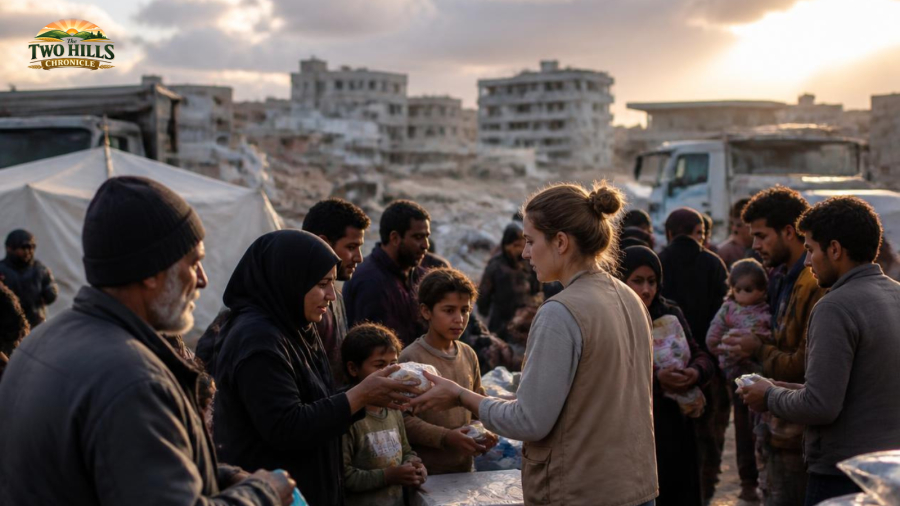
(Image generated using AI)
Today, August 19, communities around the world mark World Humanitarian Day, an opportunity to recognize the people who put themselves in harm’s way to help others through some of the most difficult circumstances imaginable.
From conflict zones and natural disasters to humanitarian emergencies and displacement, aid workers are often among the first to arrive and among the last to leave. They provide food, clean water, medical care, shelter and other life-saving assistance to people whose lives have been turned upside down by crisis.
This year’s theme, “Act For Humanity,” carries particular weight as humanitarian workers face increasingly dangerous conditions around the world.
According to a statement released today by Global Affairs Canada, 350 aid workers were killed in the line of duty in 2025, while many others were injured, kidnapped or detained.
The figures are sobering, but behind every number is a person who chose to help others.
In its World Humanitarian Day statement, the Government of Canada emphasized the importance of protecting civilians and humanitarian personnel and ensuring that aid can reach those who need it safely and without obstruction. Canada also called on all parties to conflicts to respect their obligations under international humanitarian law.
The need is enormous.
Global Affairs Canada reported that humanitarian organizations are increasingly working in environments where personnel and aid infrastructure are exposed to violence and insecurity. Warehouses, vehicles and convoys can be damaged or destroyed, while humanitarian workers themselves can face kidnapping, detention or arrest.
When that happens, it doesn't simply endanger the people providing assistance. It can prevent desperately needed food, medicine, shelter and other support from reaching vulnerable communities.
Canada has continued to contribute to humanitarian efforts around the world. In 2025, the country provided more than $898 million in humanitarian assistance through non-governmental organizations, the United Nations and the International Red Cross and Red Crescent Movement. That funding supported life-saving assistance in more than 40 countries.
While governments, international organizations and charities all have important roles to play, World Humanitarian Day also gives ordinary people an opportunity to reflect on what it means to act for humanity.
Humanitarianism is ultimately about recognizing the dignity of another human being, regardless of where they were born, what country they live in or what circumstances have placed them in crisis.
The men and women working on the front lines of humanitarian emergencies demonstrate that principle every day.
They work in places where many of us would be afraid to go. They continue helping when circumstances become dangerous. And sometimes, they make the ultimate sacrifice in service to people they may never have met before.
Today, we remember those who have lost their lives while trying to save the lives of others.
We also recognize the thousands of humanitarian workers who continue their work despite the risks.
Their courage is a reminder that even when the world seems divided by conflict, disaster and uncertainty, compassion remains one of humanity's greatest strengths.
On World Humanitarian Day, perhaps the simplest message is also the most important:
Humanity still matters.
And those who dedicate their lives to helping others remind us that, even in the darkest circumstances, there are always people willing to bring a little light.
(Source: Global Affairs Canada)
