
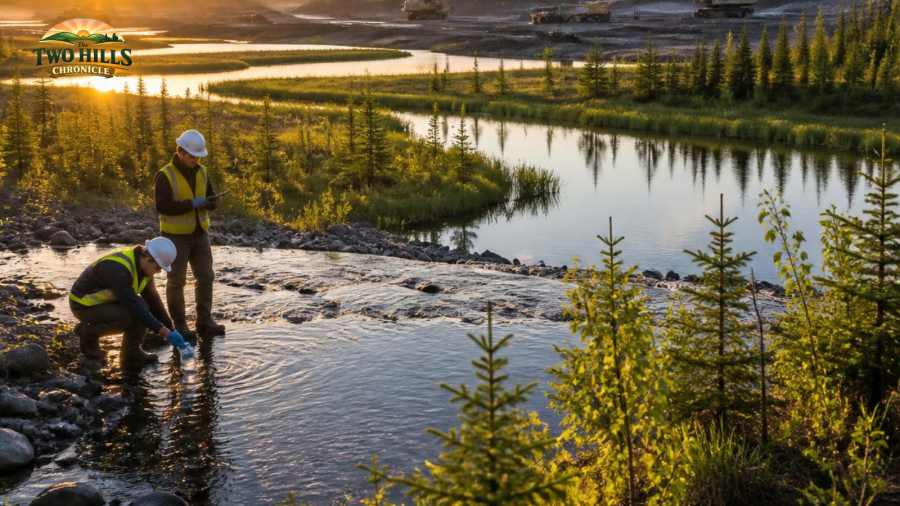
(Image generated using AI)
Alberta's government says it is making progress on implementing recommendations aimed at improving the management of oilsands mine water and reducing the long-term environmental impact of tailings ponds.
The update was provided this week during the Canadian Council of Ministers of the Environment (CCME) meeting in Calgary, where Alberta hosted federal, provincial and territorial environment ministers. Environment and Protected Areas Minister Grant Hunter outlined the province's work to address one of the country's most significant environmental challenges while supporting responsible resource development.
The Oil Sands Mine Water Steering Committee released nine recommendations in 2025 to help improve the way mine water and tailings are managed across Alberta's oilsands industry. Since then, the province has launched consultations with Indigenous communities, industry representatives, environmental experts and other stakeholders as it develops policies and technical standards to put those recommendations into practice.
Among the areas receiving attention is the separation of different types of mine water to improve opportunities for safe reuse and treatment. Alberta says discussions with regulators and industry have already been completed, with stakeholder feedback currently under review as officials consider improvements to future water management plans.
The province is also examining ways to encourage the sharing of treated mine water between oilsands operations where it can be done safely and efficiently. However, Alberta confirmed it is not pursuing the transfer of mine water between different watersheds, citing environmental concerns as well as regulatory and economic challenges.
Innovation also remains a major focus of the initiative. Alberta has invested $46 million through Emissions Reduction Alberta to support nine projects exploring new technologies designed to reduce mine water volumes, decrease tailings accumulation and accelerate land reclamation.
Additional work continues on several other recommendations, including the potential use of deep well disposal, standardized methods for measuring naphthenic acids, policies governing the safe treatment and release of mine water, the long-term management of pit lakes, and improved environmental monitoring and public reporting.
According to the provincial government, Alberta's oilsands tailings ponds currently contain more than 1.5 billion cubic metres of fluid tailings and approximately 380 million cubic metres of mine water. The province also noted that between 2013 and 2024, oilsands operations reduced freshwater use per barrel of production by 19 per cent while increasing recycled water use by 69 per cent.
Officials say progress on implementing the Steering Committee's recommendations will continue to be reported as consultation and technical work advances.
The initiative is intended to reduce the growth of tailings ponds, strengthen environmental protection and support the responsible reclamation of lands affected by oilsands development.
For more information about the Oil Sands Mine Water Science Team reports, visit the Government of Alberta website by clicking the link here.
(Source: Government of Alberta)
