
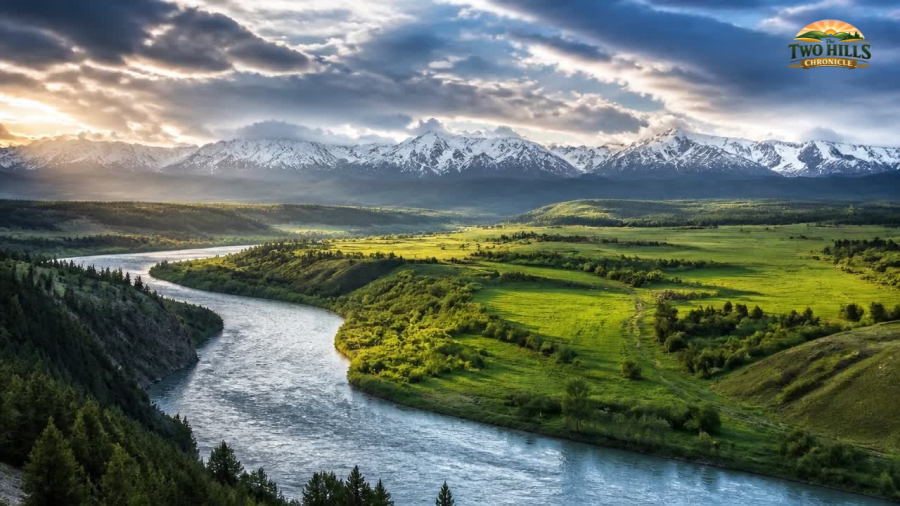
(Image generated using AI)
Most of Alberta is heading into summer with stronger water conditions than seen in recent years, according to the province’s latest May Water Supply Outlook.
The report points to healthy mountain snowpack levels, improved reservoir storage and stronger projected river flows across much of central and southern Alberta — welcome news for communities, farmers and industries that rely heavily on stable water supplies.
According to the outlook, river volumes through September are expected to be above normal or well above normal in several major basins, including the North Saskatchewan, Red Deer and Bow River systems, along with most parts of the Oldman River basin.
Alberta Environment and Protected Areas Minister Grant Hunter said the province is entering the summer season in a much stronger position than in recent years.
“Strong river flows, full reservoirs and additional mountain snowmelt still to come are all good news for communities, agricultural producers and the many industries that depend on a reliable source of water,” Hunter said in the release.
The positive forecast is largely tied to exceptional snowpack conditions in the Rocky Mountains. Provincial surveys conducted near the beginning of May found that 92 per cent of mountain snowpack sites were above normal or well above normal, with 15 per cent recording the highest snowpack levels on record.
Reservoir conditions in southern Alberta are also reportedly in strong shape, with normal storage levels in the Red Deer River basin and above-normal storage in the Bow, Oldman and South Saskatchewan River basins.
Despite the encouraging provincial outlook, officials continue to monitor conditions in Alberta’s far south.
The Milk River basin remains a significant concern, with river volumes forecast to stay well below normal through September. Officials say early runoff was absorbed into dry soil conditions before reaching the river system.
As a result of water-sharing requirements under the Canada-U.S. Boundary Waters Treaty, irrigators in the basin are no longer able to draw water from the river during the irrigation season. Household water use in the Town of Milk River is not expected to be affected.
The province stated it continues exploring options that could provide additional flexibility for Canadian irrigators while remaining compliant with treaty obligations and protecting downstream users in Montana.
Current drought conditions across Alberta have improved considerably compared to recent years. More than half of Alberta’s major river basins are now classified at Stage 0, meaning no drought conditions are currently present.
However, some regions remain under heightened monitoring, including the Milk River basin, which is currently classified at Stage 3 drought conditions.
Provincial snowpack surveys continue monthly through June, with water forecasts updated regularly throughout the spring and summer months.
For more information about the Water Supply outlook, visit the Government of Alberta website at rivers.alberta.ca/Contents/WaterSupply/2026/5/epa-water-supply-outlook-report-may-2026-v2.pdf.
Information for this article was sourced from the Government of Alberta website.
