
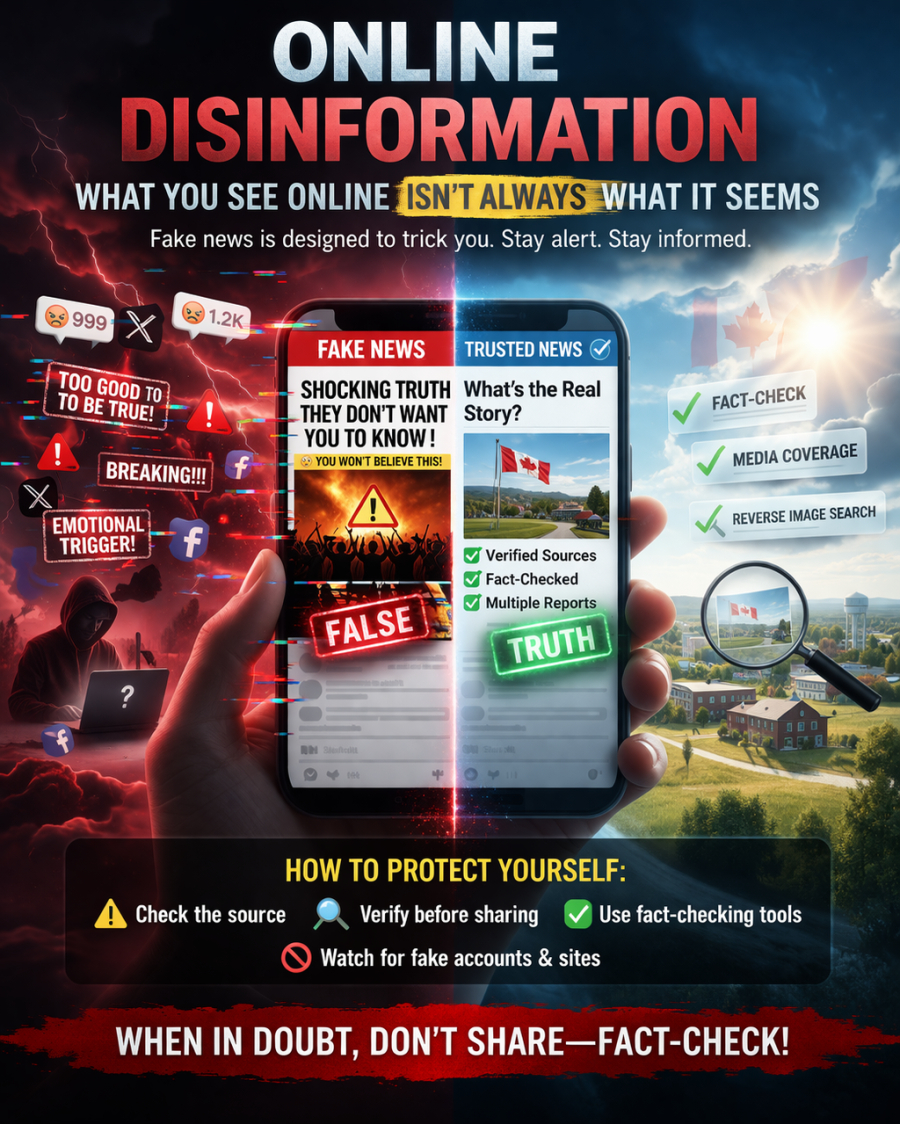
(Image Generated by AI)
In today’s digital world, not everything we see online is true—and some of it is designed to mislead on purpose.
Online disinformation, often referred to as “fake news,” is false information created to trigger emotional reactions and influence how people think, feel, and act. If something online raises your eyebrows, experts say it should also raise questions.
From health advice to financial opportunities and even political issues, many people rely on online information to make important decisions. But when that information is misleading or false, it can have real-world consequences.
Disinformation can create confusion, delay important decisions, and even continue to influence beliefs long after it has been proven false. In areas like health, it can be particularly dangerous—spreading harmful claims about treatments or diseases. Financially, it can lead to scams, bad investments, and fraud.
There are also broader impacts. A steady stream of false or misleading information can erode trust in institutions, divide communities, and weaken the shared understanding of facts that democracies depend on.
Spotting disinformation
While disinformation can be difficult to identify, there are several warning signs to watch for.
Content designed to provoke strong emotional reactions—such as anger, fear, or shock—is often a red flag. Posts that make extreme claims, seem too good to be true, or rely on sensational headlines like “You won’t believe this” should be treated with caution.
Experts recommend taking a moment to verify information before sharing it.
Tools to stay informed
Simple steps can go a long way in separating fact from fiction:
- Check the source: Look into who published the information and whether they are credible.
- Verify with other outlets: If a story is true, multiple reliable sources will usually report it.
- Use fact-checking tools: Organizations like MediaSmarts, AFP Fact Check, and Snopes regularly investigate viral claims.
- Reverse image search: Images can be misleading or taken out of context—searching them can reveal their origin.
Watch for fake accounts and websites
Disinformation is often spread through fake social media profiles and spoof websites designed to look legitimate.
Signs of a fake account can include newly created profiles, lack of personal details, stock images instead of real photos, and unusual engagement patterns. Similarly, fraudulent websites may closely mimic trusted organizations but contain subtle differences in their web addresses or content.
What you can do
Stopping the spread of disinformation doesn’t require special expertise—just awareness.
Choosing not to share suspicious content is one of the most effective actions. For those who want to go further, asking questions, sharing verified information, or reporting false content can help limit its reach.
Information for this article was sourced from the Government of Canada website.
For more information about Online disinformation visit the Government of Canada website at www.canada.ca/en/campaign/online-disinformation.html.
