
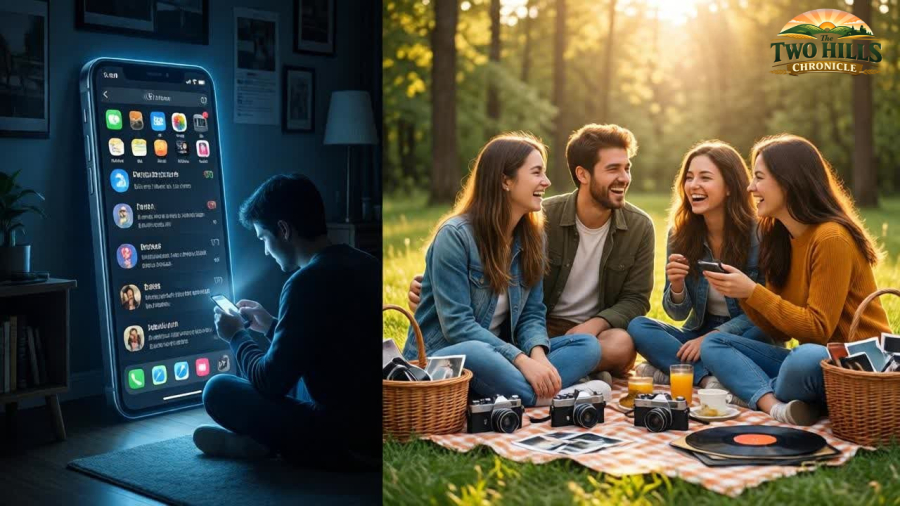
(Image generated using AI)
In a world driven by algorithms, artificial intelligence, and endless scrolling, something unexpected is happening in 2026: people are starting to look backward—and inward.
From the resurgence of mid-2010s aesthetics to the rise of intimate, real-world gatherings, today’s cultural landscape is being shaped by a powerful desire for authenticity, connection, and meaning.
The Rise of Nostalgia Culture
If it feels like the internet is stuck in the past, you’re not imagining it.
A major trend dominating social media right now is the idea that “2026 is the new 2016,” with users reviving everything from old filters to viral challenges and music from a decade ago.
This wave of nostalgia isn’t just about aesthetics—it’s emotional. For many, especially younger generations, it reflects a longing for a simpler, pre-pandemic time before AI reshaped how we create and consume content.
Even beauty and fashion are leaning into the past. Frosted makeup, glitter finishes, and early-2000s-inspired looks are making a comeback, driven largely by TikTok and influencer culture.
From Viral to Meaningful: The Shift Toward Community
For years, online success was measured in views, likes, and viral moments. But in 2026, that mindset is changing.
Audiences are increasingly drawn to community-driven content—spaces where people feel connected rather than just entertained.
Social media platforms are evolving into something closer to ecosystems than entertainment feeds. People are forming niche communities, following creators they trust, and engaging in longer, more meaningful content instead of quick, disposable clips.
In short, it’s no longer about going viral—it’s about belonging.
The Return of “Real Life” Experiences
At the same time, there’s a noticeable shift happening offline.
After years of digital overload, people are rediscovering the value of physical, shared experiences—whether it’s casual picnics, small gatherings, or creatively styled home spaces.
Even home design trends reflect this change. The rise of “everyday exhibits”—personal, imperfect gallery walls—signals a move away from polished perfection toward storytelling and individuality.
This cultural pivot suggests that people are no longer chasing idealized lifestyles—they’re embracing real ones.
The Creativity vs. Algorithm Tension
Despite these positive shifts, there’s still an ongoing tension shaping modern culture: the battle between creativity and algorithms.
Music, fashion, and even internet subcultures are increasingly influenced by what performs well online rather than what feels authentic. In some cases, entire genres and trends are being shaped for virality first and artistry second.
At the same time, brands and creators are being forced to adapt. Traditional, rigid branding is fading, replaced by more flexible, personality-driven approaches that allow for constant reinvention.
So What Does It All Mean?
The culture of 2026 is defined by contradiction.
We are more digitally connected than ever—but craving real human connection.
We have unlimited content—but are searching for meaning.
We are moving forward technologically—but emotionally looking back.
And maybe that’s the point.
In a rapidly changing world, culture isn’t just about what’s new—it’s about what feels true.
